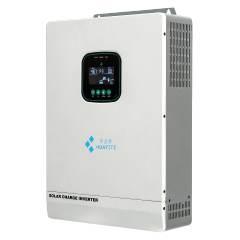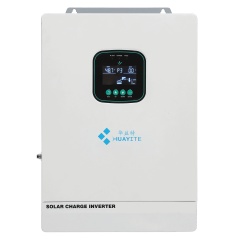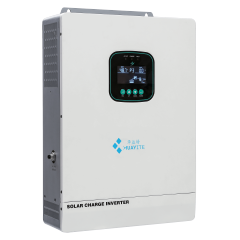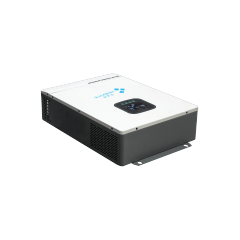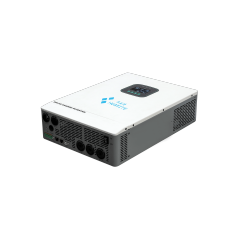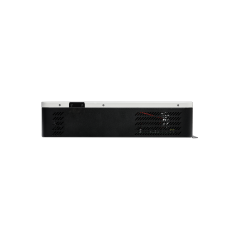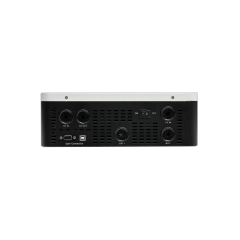
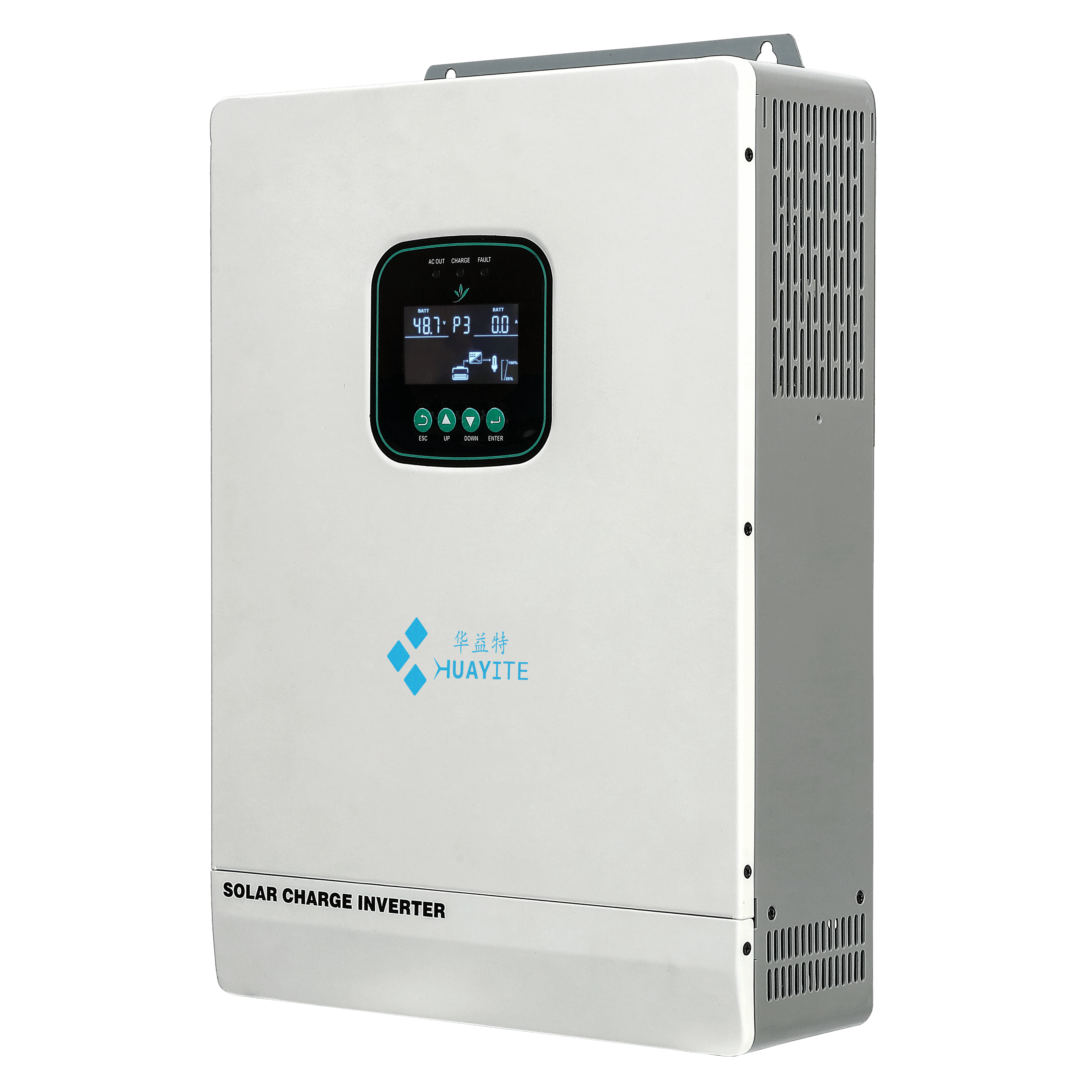
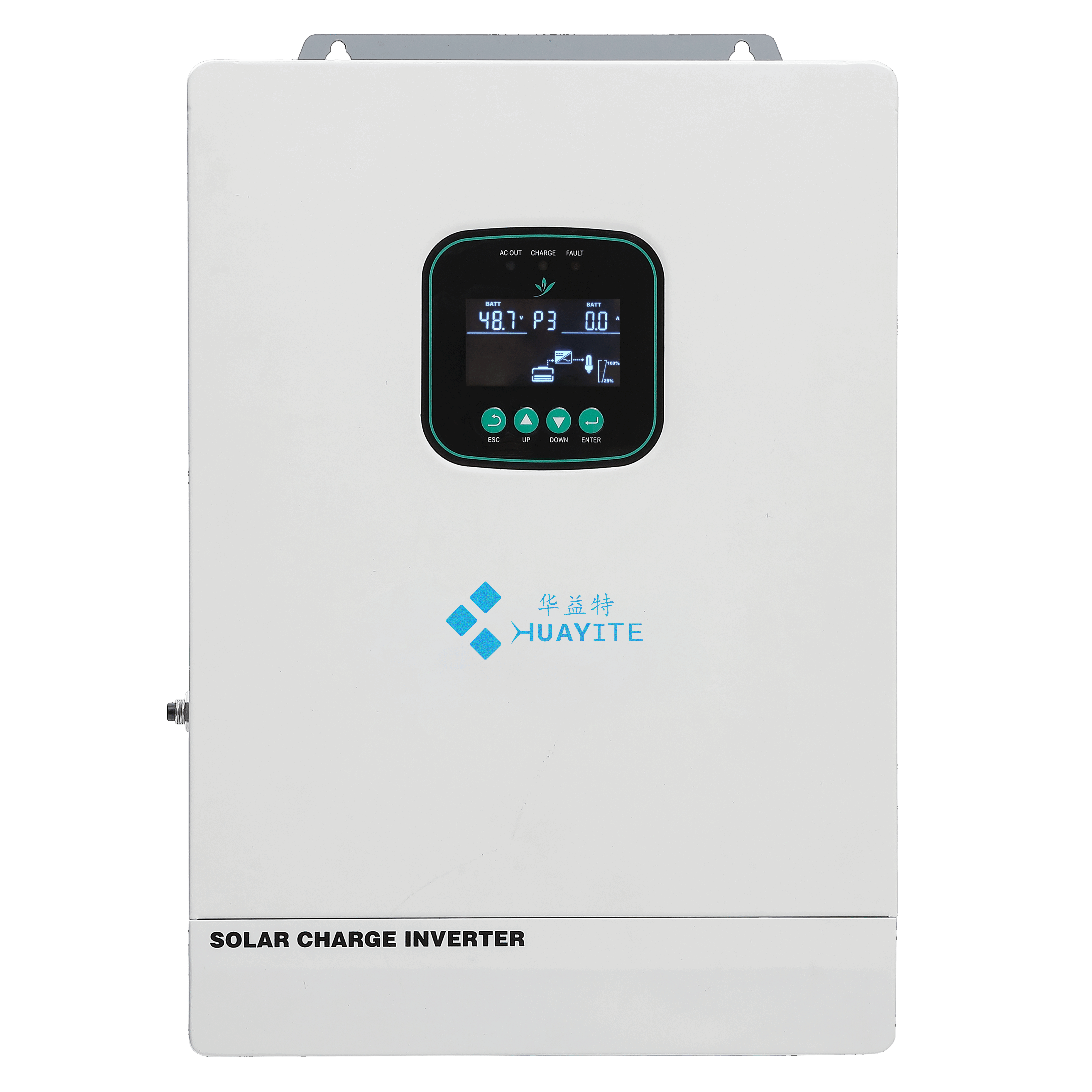
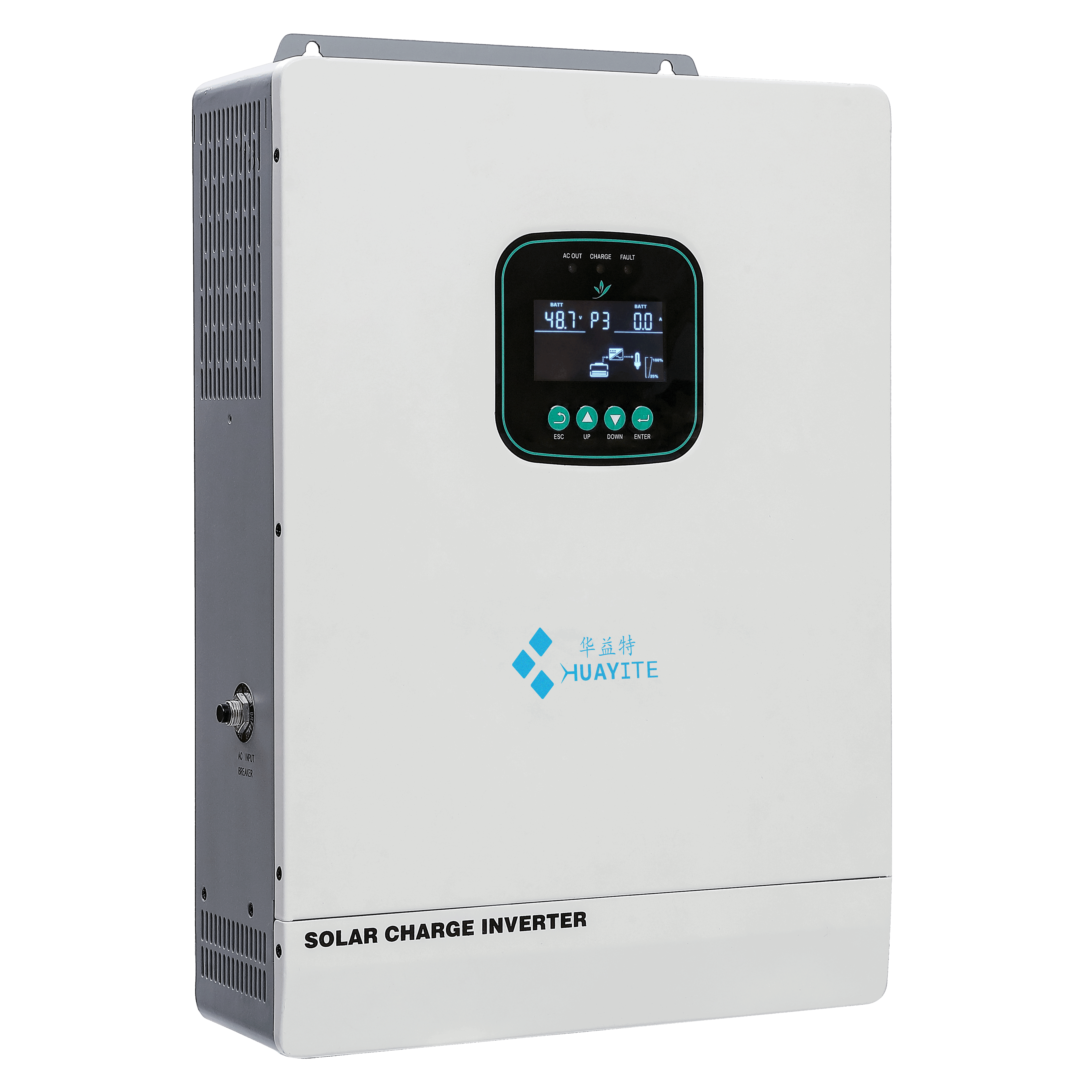
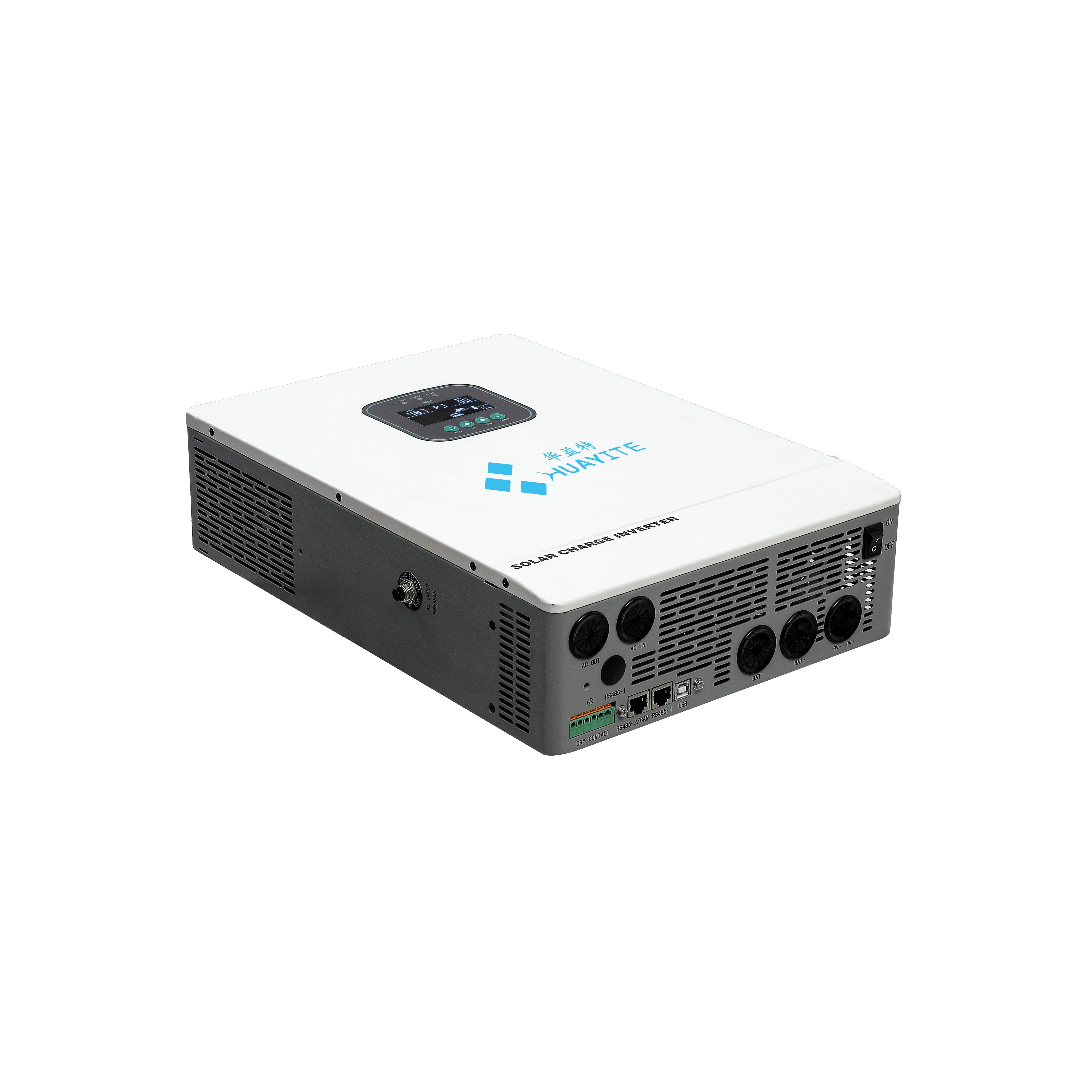
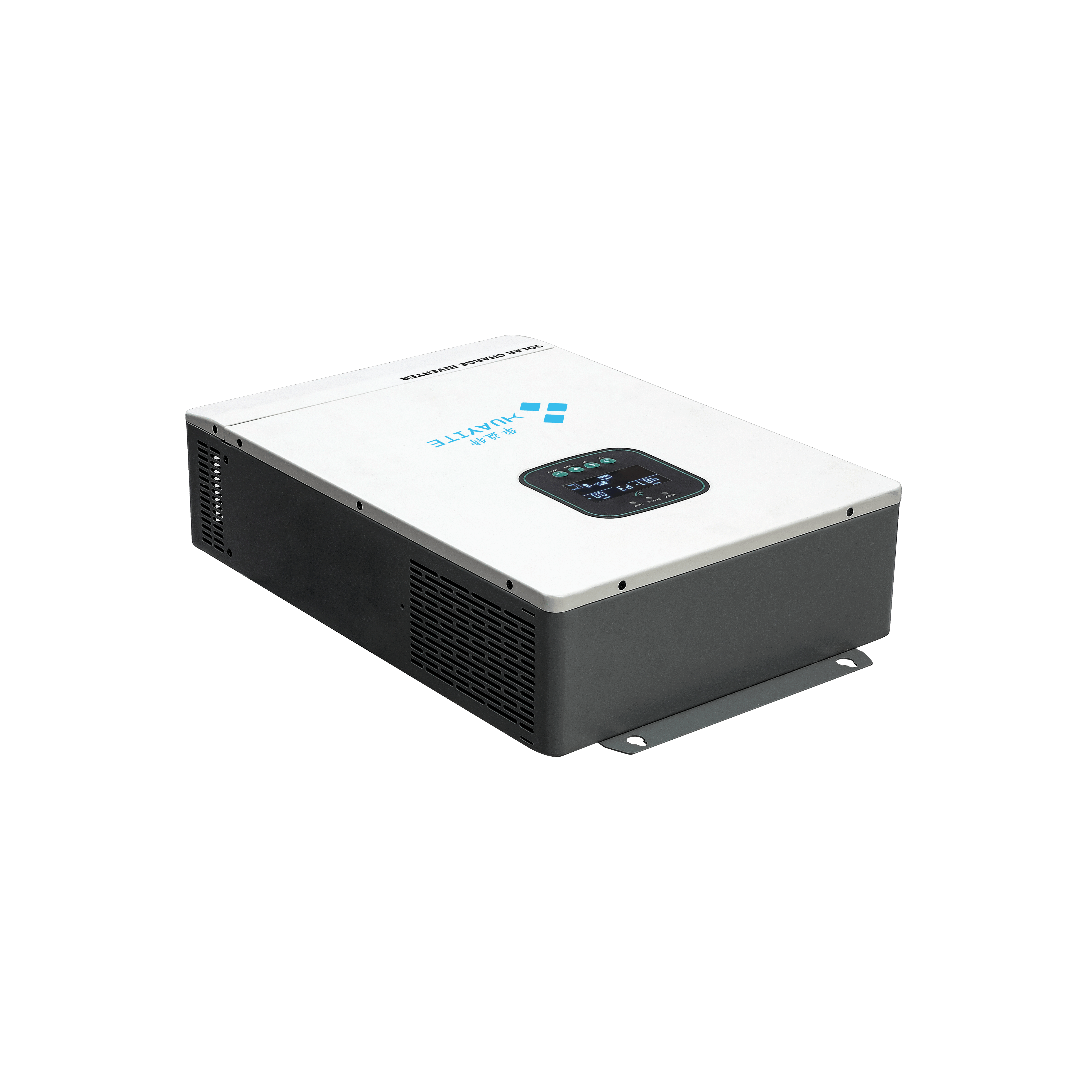
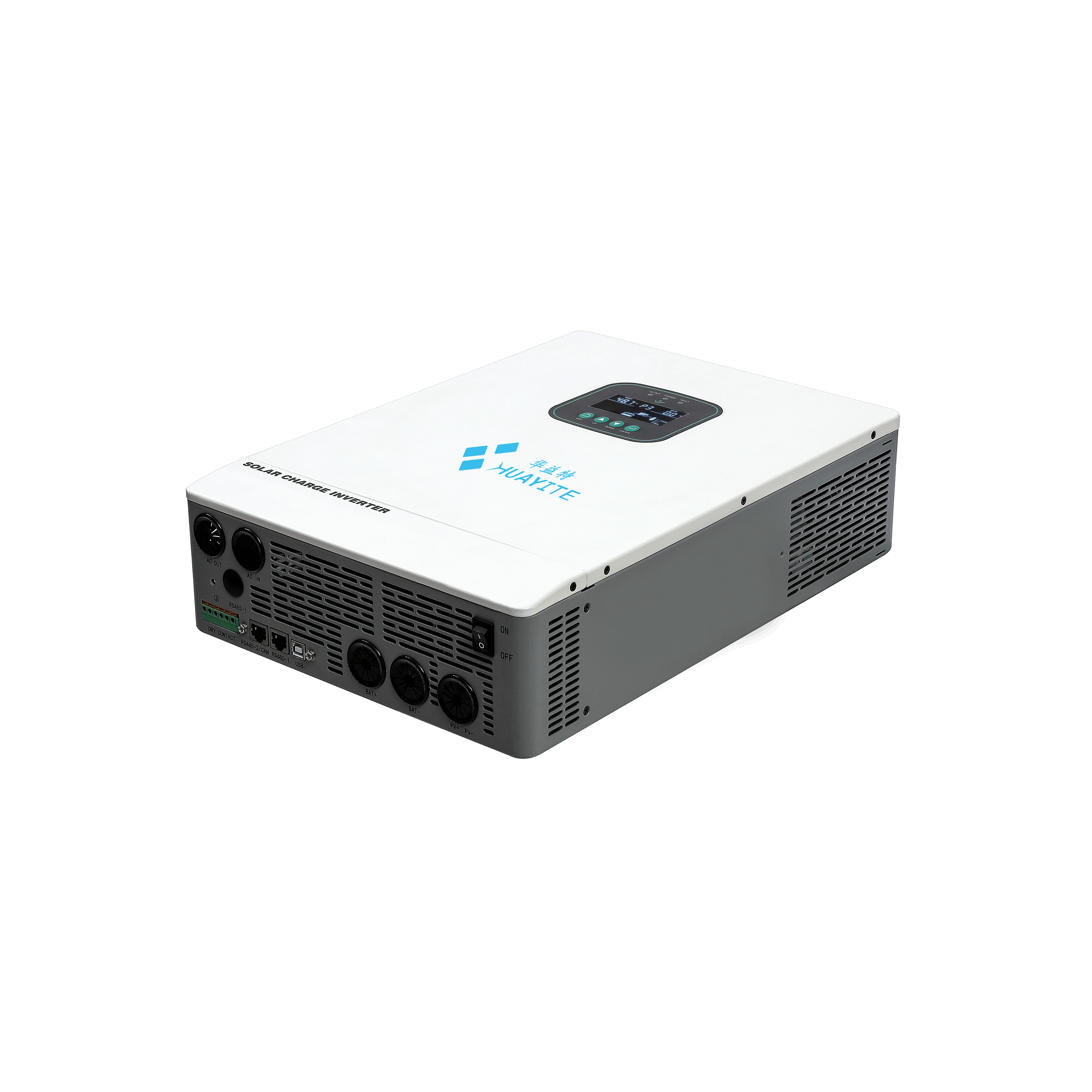
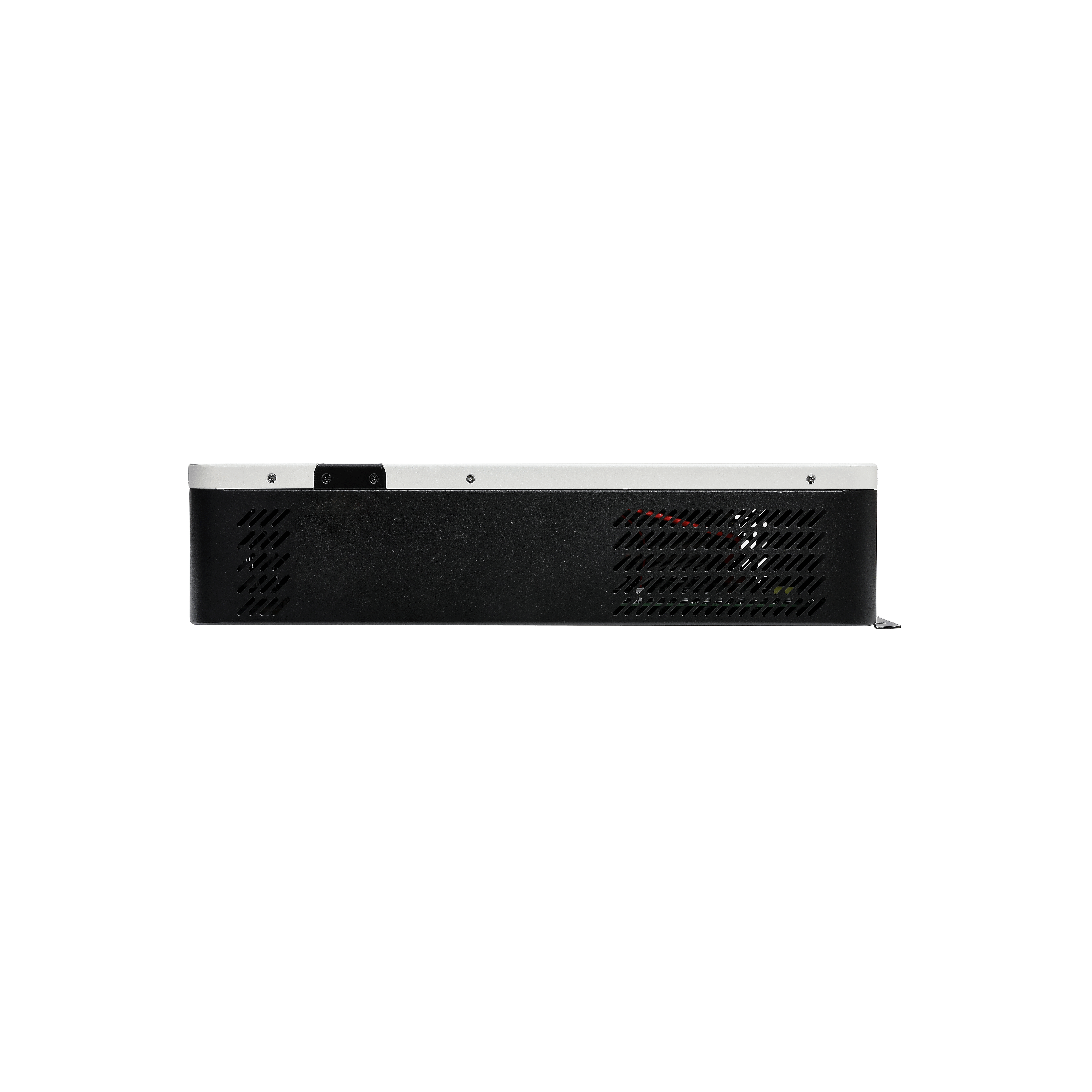

 Anti-backflow grid connection function (photovoltaic mains and power hybrid supply) can be set in grid connection mode. Supports battery-free operation. Supports lead-acid batteries and lithium batteries. It has the dual activation function of lithium battery, which can be triggered by either mains power or photovoltaic power supply. It has energy saving mode function to reduce no-load loss. There are four charging modes available: solar only, mains priority, solar priority and hybrid charging. It has two output modes: mains bypass and inverter output, and has the function of uninterrupted power supply.
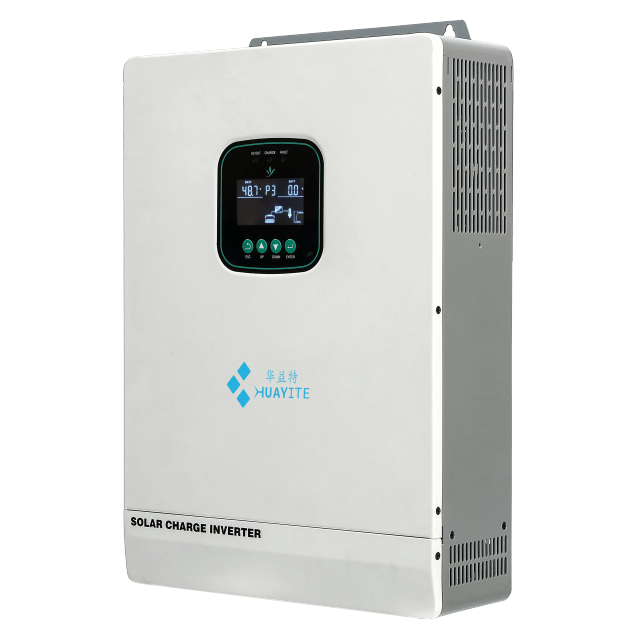
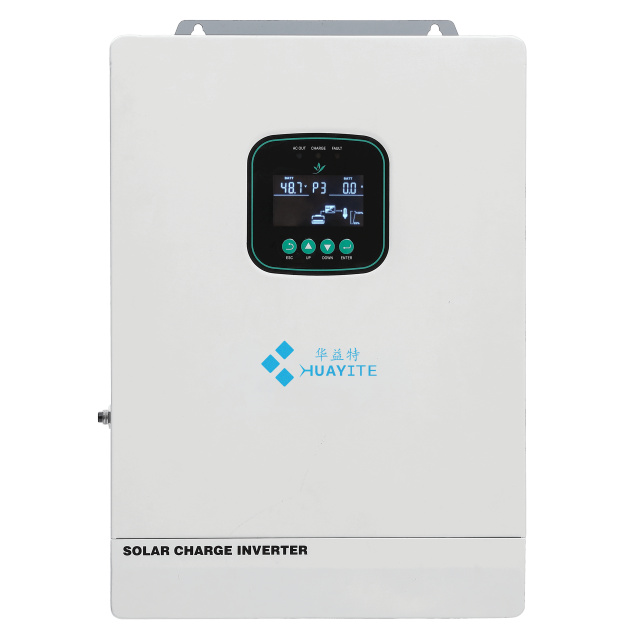
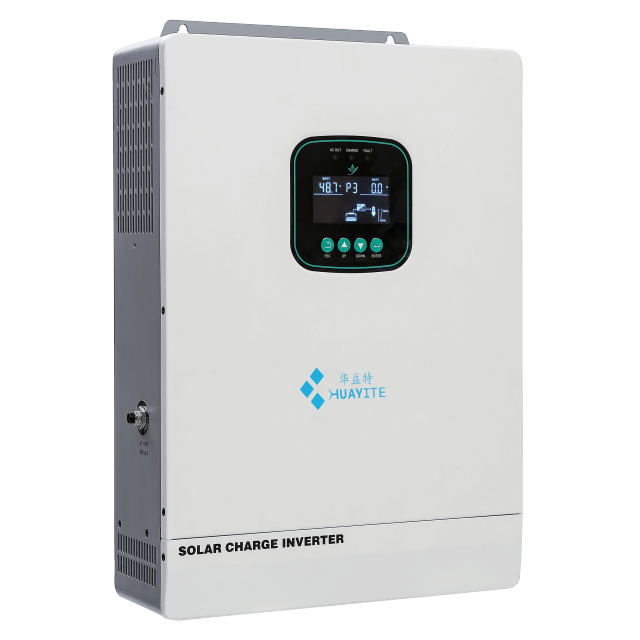
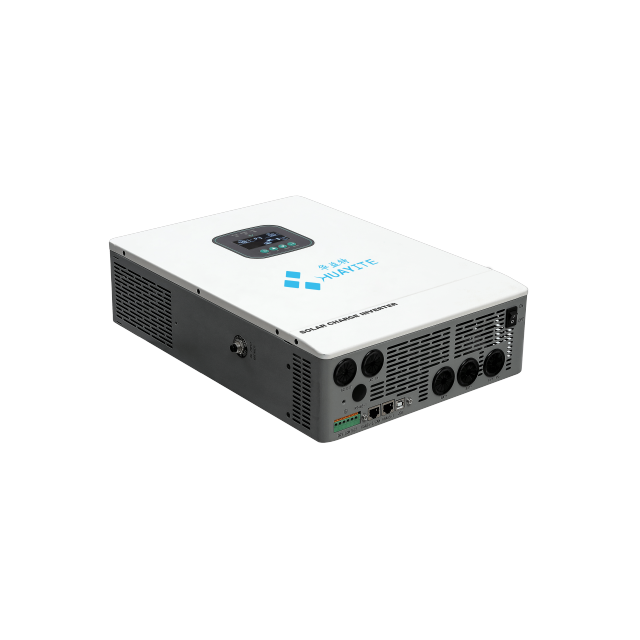
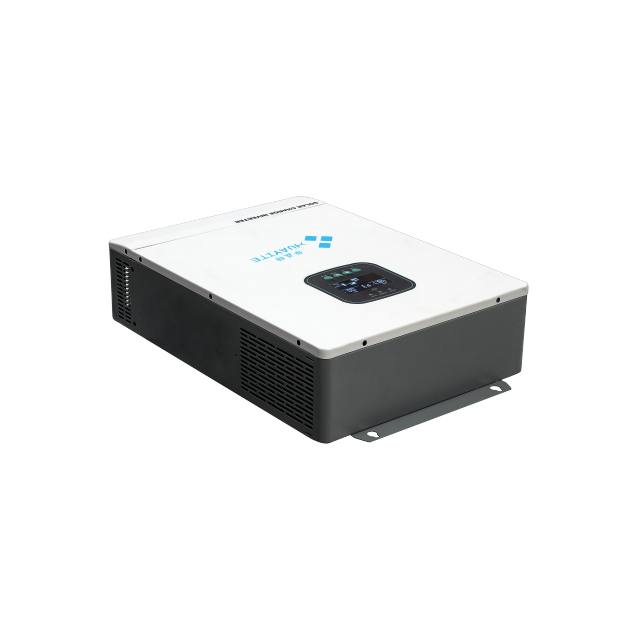
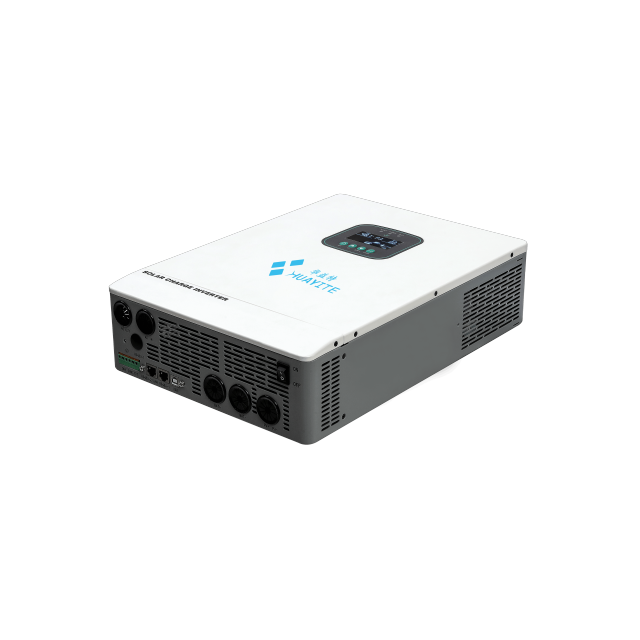
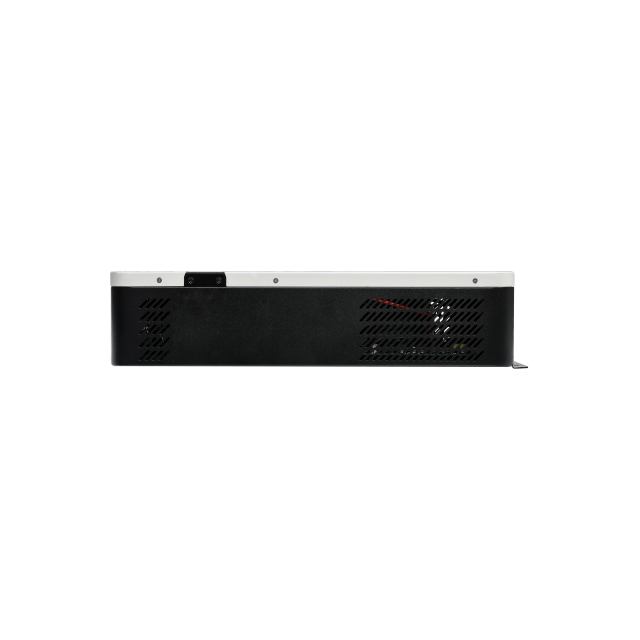
The HB-PV Series is a high-frequency off grid hybrid solar inverter with MPPT charge controller, built for sites that sit close to a utility supply but cannot depend on it. In grid connection mode it harvests solar, charges a battery bank and runs the load, while an anti-backflow setting keeps reverse power from flowing back into the utility — the arrangement most distributors and integrators are asked for when a customer wants self-consumption without arguing with the meter.
Off-grid duty is native to the same unit: when the mains drops, this off grid pure sine wave inverter carries the load from battery and PV, switching in 10 ms in UPS mode and 20 ms in APL mode. Two output modes cover the difference: mains bypass, where the utility feeds the load directly, and inverter output, where the unit supplies it. With the energy-saving function enabled, no-load loss falls when the site is quiet.
As solar inverter manufacturers, we offer three ratings — 3.6 kW on a 24 VDC battery, and 5.6 kW or 5.5 kW on 48 VDC. The two 48 V models can be paralleled up to nine units, so a project can start with one machine and add capacity as the site grows. Both lead-acid and lithium banks are supported, and the unit will also run with no battery at all — useful for a staged build where the battery arrives in a later phase.
We supply wholesale solar inverters of this kind to solar and electrical wholesalers, off-grid and weak-grid integrators, EPC contractors and private-label brand owners. If you are weighing it against a purely off-grid unit or a low-frequency platform, the quick version is this: choose the HB-PV when grid interaction, anti-backflow and parallel expansion are on the requirement list, and step to a different series when they are not.
Buyers who looked at this off grid pure sine wave inverter also looked at the HX-PV Series Solar Inverter, a power-frequency wall-mounted unit for smaller loads. If your requirement is a compact machine for a cabin, caravan or light backup duty rather than a grid-interactive hybrid with parallel expansion, the HX-PV line is the closer match.
For buyers of wholesale solar inverters, the choice within our wider range usually comes down to topology and duty. Low-frequency platforms are the answer where heavy motor loads and high surge are the norm. This high-frequency model is the answer where grid interaction, anti-backflow and parallel growth matter more than raw surge. Tell us the load list and the grid situation, and we will point you to the series that fits rather than the one that happens to be in stock.
Start with the battery, because it decides the model on an off grid solar inverter charger. The 3600 W unit runs a 24 VDC bank. The 5600 W and 5500 W units run 48 VDC. Putting a 48 V battery on the 24 V machine, or the reverse, is the single most common mismatch we see in orders, so confirm the bank voltage before anything else. The 3600 W unit also cannot be paralleled, so if the site may grow beyond about 3.6 kW, plan on one of the 48 V models from the start rather than discovering the limit later.
Next, match rating to load — a step where solar inverter manufacturers are often asked to advise. The 5600 W and 5500 W units are close in continuous output but differ in surge: 12000 W against 11000 W, and 6000 W against 5500 W of allowable PV array. If the site carries an air conditioner, a pump or a compressor, work from the surge figure rather than the rated one — a motor may draw several times its running current for the second or two it takes to spin up, and the larger surge headroom on the 5600 W model absorbs that more comfortably. For loads that are mostly lighting, electronics and small appliances, the 5500 W rating is ample.
Then size the array. Maximum PV array power is 4000 W on the 3600 W model, 6000 W on the 5600 W and 5500 W on the 5500 W. Keep the string's open-circuit voltage under 500 VDC and its operating window inside 120-450 Vdc; a string that sits below 120 V for most of the day will not track well, and one that climbs past 450 V at cold temperatures is asking for trouble. Maximum PV input current is 13 A on the smaller model and 22 A on the two 48 V units — check panel current against that before finalising the string layout.
Battery bank capacity is a site decision rather than an inverter decision, but the charging limits tell you what the unit can put back. Maximum solar charge current is 80 A on the 3600 W and 100 A on the 48 V models; maximum AC charge current is 40 A, 80 A and 80 A respectively. A very large bank charged only from a small array will sit at partial state of charge for long stretches, so size storage to the daily load, not to the inverter's maximum. If you are unsure, send us the load list and the battery datasheet and we will work the numbers with you.
Four charging modes decide where the energy comes from on this off grid solar inverter charger. Solar only ignores the mains entirely and charges from PV — the setting for a site with a reliable array and an unreliable or expensive utility. Mains priority charges from the grid first and lets solar top up, which suits overnight-tariff markets where the battery must be full by morning. Solar priority does the reverse and treats mains as a fallback. Hybrid charging draws from both at once, which is the practical choice when the array is undersized for the daily load and the utility has to fill the gap.
The charging profile changes with the battery chemistry, a point solar inverter suppliers are often asked to confirm. Lead-acid banks — flooded, AGM or GEL — follow a 3-step algorithm that brings the bank up, holds it and then floats it, with float at 27.4 VDC on the 24 V model and 54 VDC on the 48 V models. Lithium packs follow a 4-step profile. Set the profile before the first charge; the wrong one shortens the life of either chemistry, and on a lead bank it can leave the cells stratified.
Overcharge protection on this hybrid solar inverter trips at 30 VDC on the 24 V model and 63 VDC on the 48 V models, so an accidental high charge or a mis-set profile has a hard ceiling behind it. The dual lithium activation feature is worth knowing about at commissioning: a lithium pack in transit can arrive in sleep mode, and this unit can wake it from either the mains or the PV side, so you are not dependent on one input being live at the moment of first start.
Battery-free operation is a real mode, not a fallback, on this off grid pure sine wave inverter. With no battery connected the unit manages PV and load directly, which is useful for daytime-only sites, for a customer who wants to install panels now and storage next season, and as a diagnostic step when a suspected battery fault needs to be ruled out. Do not expect backup power without a battery — with nothing to store energy in, there is nothing to carry the load through an outage.
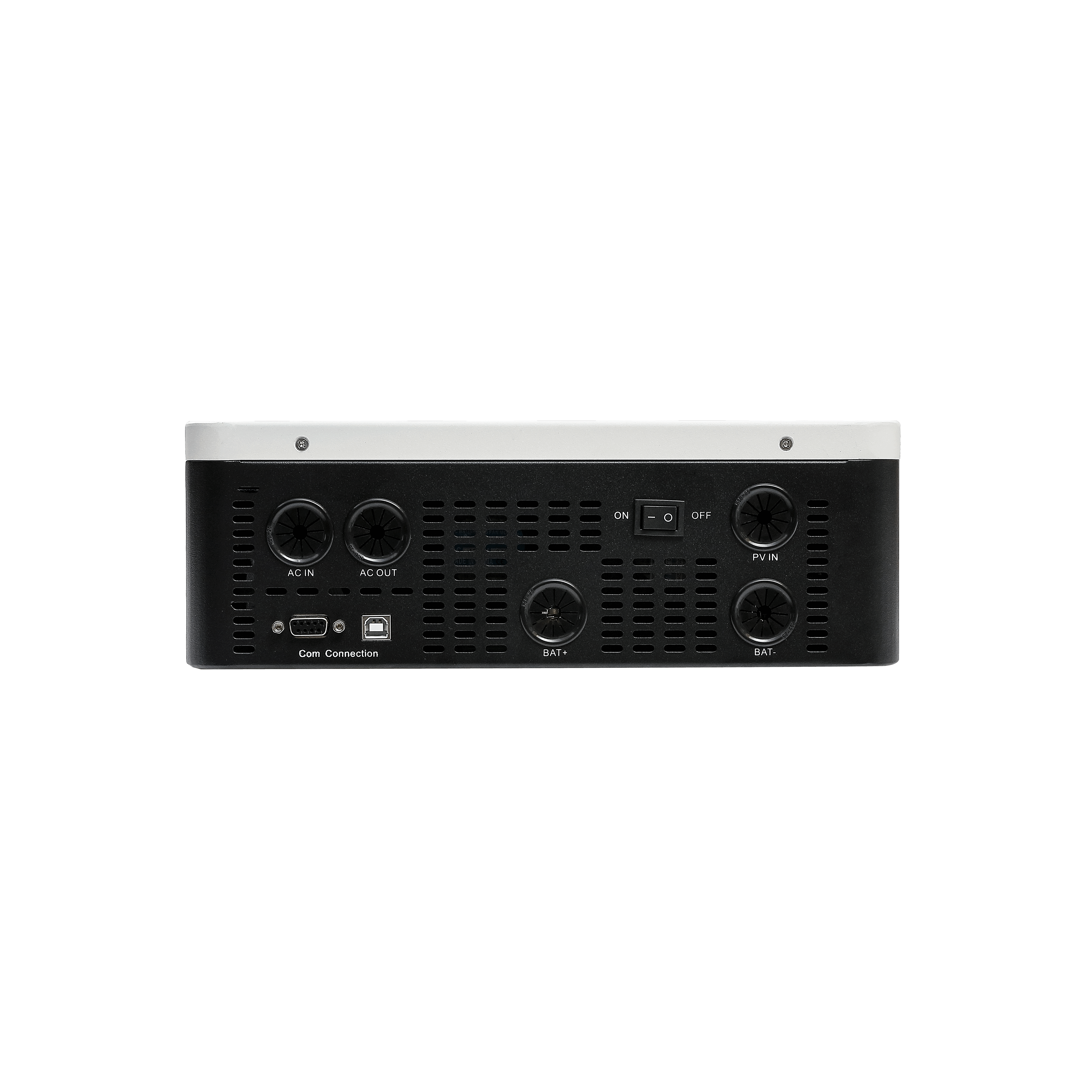
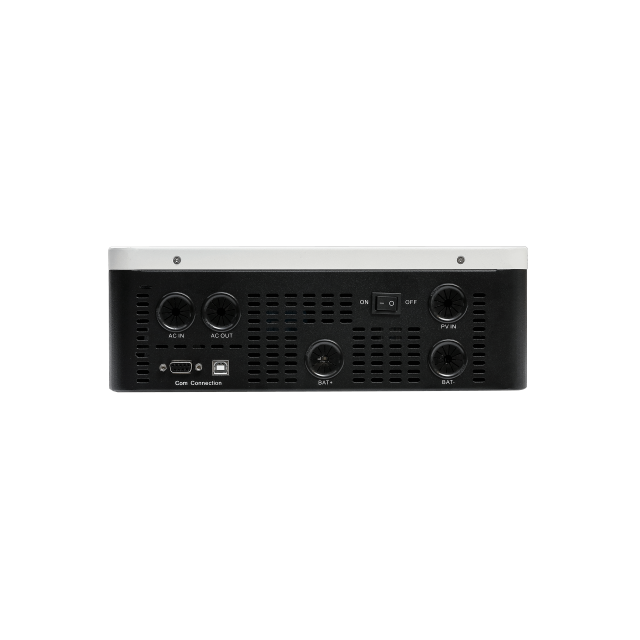
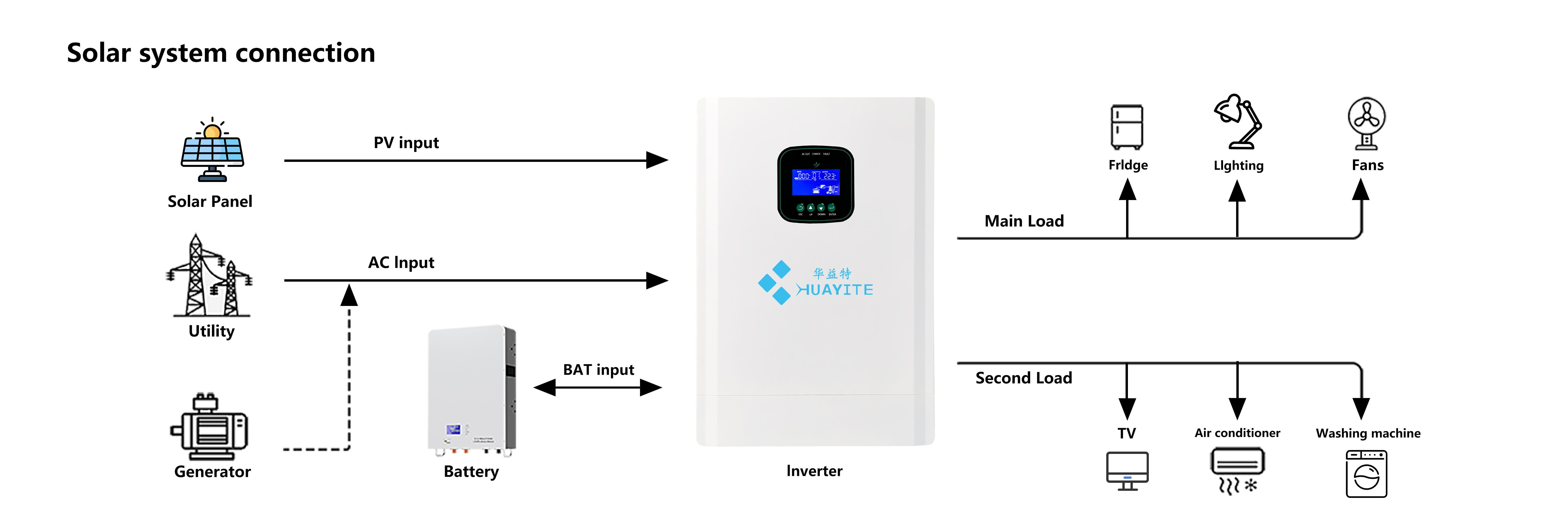
The connection drawing on this off grid solar inverter charger shows the whole energy path in one view. PV input arrives from the solar panel string into the PV IN terminals. AC input comes from either the utility or a generator into AC IN. The battery connects to BAT+ and BAT- on the terminal block. AC OUT feeds the loads, which the drawing splits into a main load group — fridge, lighting, fans — and a second load group carrying heavier items such as an air conditioner and a washing machine.
That two-group split is the practical part of the drawing. Putting the heavy, surge-hungry appliances on the second load and the always-on essentials on the main load lets you decide what stays live when the battery is low, without rewiring at the panel. The drawing also makes clear that the inverter sits between all four paths — PV, mains, battery and load — rather than in series with only one of them.
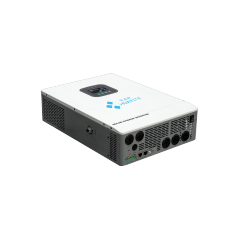
Use the drawing to plan cable runs and terminal capacity before the unit arrives, whether you are installing one machine or buying wholesale solar inverters for stock. The bottom face carries the connection points: PV IN, AC IN, AC OUT and the battery terminals, with the ON/OFF switch alongside. Because the terminals face downward, the unit is normally mounted with cable entry from below — worth checking against the wall layout and the trunking route on site.
A commissioning note: confirm the AC input voltage setting matches the site supply (110/120 V or 220/230 V) and that the 50/60 Hz sensing has picked up the local frequency before connecting loads. Getting that right first time saves a return visit.
| Model | HET-HB-PV3600W | HET-HB-PV5600W | HET-HB-PV5500W |
|---|---|---|---|
| Nominal battery system voltage | 24VDC | 48VDC | 48VDC |
| Rated power | 3600VA / 3600W | 5600VA / 5600W | 5500VA / 5500W |
| Surge power | 7200W | 12000W | 11000W |
| Waveform | Pure sine wave | Pure sine wave | Pure sine wave |
| AC voltage regulation (battery mode) | 230VAC ±5% (setting) | 230VAC ±5% (setting) | 230VAC ±5% (setting) |
| Inverter efficiency (peak) | >92% | >92% | >92% |
| Transfer time | 10ms (UPS / VDE4105) / 20ms (APL) | 10 ms (UPS / VDE4105) / 20 ms (APL) | 10 ms (UPS / VDE4105) / 20 ms (APL) |
| AC input voltage | 110/120Vac/220/230Vac ±5% (setting) | 110/120Vac/220/230Vac ±5% (setting) | 110/120Vac/220/230Vac ±5% (setting) |
| Selectable voltage range | 170~280VAC(UPS) / 90~280VAC(APL) | 170~280VAC (UPS) / 90~280VAC (APL) | 170~280VAC (UPS) / 90~280VAC (APL) |
| Frequency range | 50Hz / 60Hz(Auto sensing) | 50Hz / 60Hz (auto sensing) | 50Hz / 60Hz (auto sensing) |
| Floating charge voltage | 27.4VDC | 54VDC | 54VDC |
| Overcharge protection | 30VDC | 63VDC | 63VDC |
| Maximum PV array open circuit voltage | 500VDC | 500VDC | 500VDC |
| Maximum PV input current | 13A | 22A | 22A |
| Maximum PV array power | 4000W | 6000W | 5500W |
| PV array MPPT voltage range | 120-450Vdc | 120-450Vdc | 120-450Vdc |
| Maximum solar charge current | 80A | 100A | 100A |
| Maximum AC charge current | 40A | 80A | 80A |
| Charging algorithm | 3-Step (Flooded Battery, AGM / GEL / LEAD Battery), 4-Step (Li) | 3-step (flooded, AGM / GEL / lead), 4-step (Li) | 3-step (flooded, AGM / GEL / lead), 4-step (Li) |
| Parallel operation | No | Yes, up to 9 pcs | Yes, up to 9 pcs |
| Machine dimension (WHD) | 415*280*100 mm | 465*300*115 mm | 465*300*115 mm |
| Package dimension (WHD) | 515*365*175 mm | 515*365*175 mm | 515*365*175 mm |
| N.W | 7.8 kg | 10.5 kg | 10 kg |
| G.W | 8.8 kg | 11.5 kg | 11 kg |
| Humidity | 5% to 95% Relative humidity (Non-condensing) | 5% to 95% RH (non-condensing) | 5% to 95% RH (non-condensing) |
| Operating temperature | -15°C to 55°C | -15 °C to 55 °C | -15 °C to 55 °C |
| Storage temperature | -25°C ~ 60°C | -25 °C to 60 °C | -25 °C to 60 °C |
| Standard reference on the label | CE(TEC62109-1.2) EN61000,C2 | CE(TEC62109-1.2) EN61000,C2 | CE(TEC62109-1.2) EN61000,C2 |
Choosing the right unit for a site starts with a conversation, not a catalogue number. Share your load profile, battery voltage and backup requirement, and our engineers will help you match a model from our full range and confirm the accessories that go with it. As solar inverter manufacturers with in-house R&D and more than 20 years in the industry behind us, the same Shenzhen-based team stays with you after delivery: wiring and commissioning guidance, fault diagnosis, and spare-part support for units already in service. For private-label projects, they also handle artwork and specification approvals before production.
Anti-backflow grid connection functionSupports battery-free operationClear System Monitoring: LCD+LED, WIFI/4GPure Sine Wave & Isolated DesignBuiltin MPPT Solar Charger Controller: 120AAdvanced Remote Management (Optional): RJ11/RJ45/RS232/485