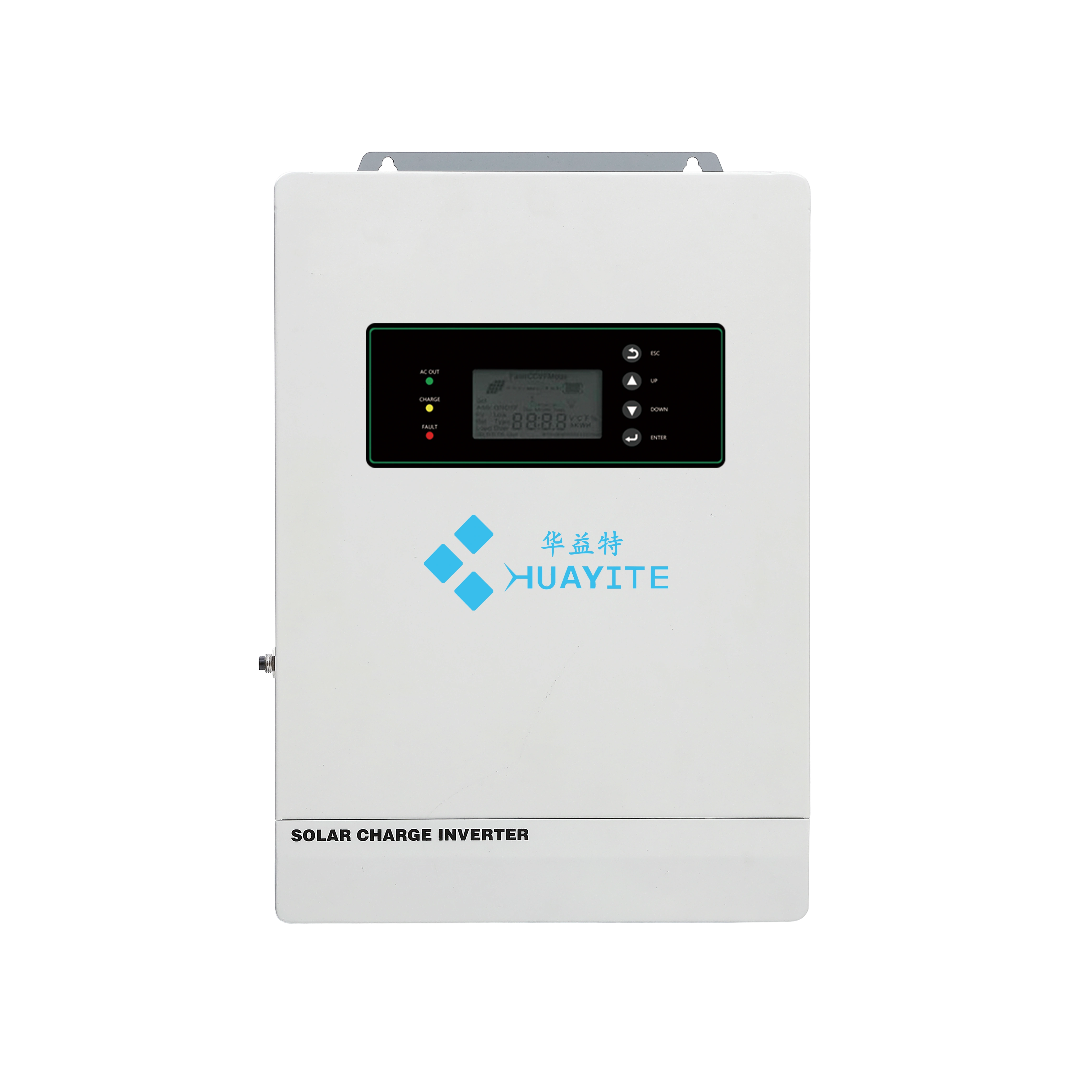
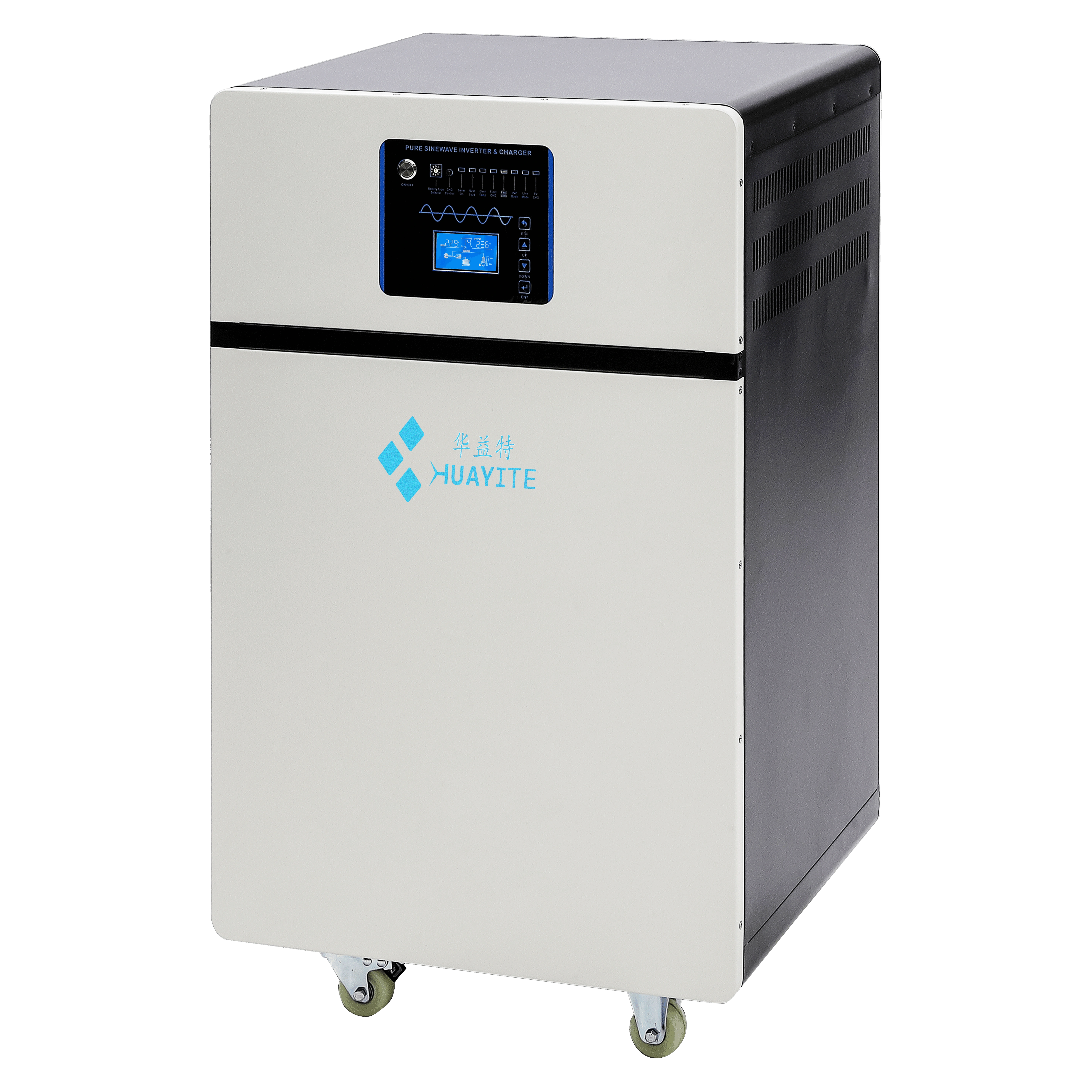
HS Series Off-grid Low Frequency Solar Inverter 1-12KW

HS Series Off-grid Low Frequency Solar Inverter 1-12KW

Engineered for telecom sites, rural electrification projects, and agricultural loads, the HS Series pairs a low-frequency U-type transformer with four-in-one mains bypass, mains charging, inverter UPS, and fully automatic switching. Supplied by a solar inverter manufacturer with modular 1KW to 12KW construction, every unit leaves a solar inverter factory ready for pure sine wave output and surge handling up to three times the rated power.

HS Series Off-grid low frequency solar inverter 1-12KW

Nine Models Across 1–12 KW

The range is modular: the same platform scales from a single household load to a multi-pump agricultural or telecom site, which is what lets a distributor stock one series instead of several. Each step up in continuous output carries a matching surge rating — three times rated power — and a stated motor-starting capability.

Model Continuous output Surge rating / motor start
HS1000W 1.0 KW 3000 VA · 1 HP
HS2000W 2.0 KW 6000 VA · 2 HP
HS3000W 3.0 KW 9000 VA · 3 HP
HS4000W 4.0 KW 12000 VA · 4 HP
HS5000W 5.0 KW 15000 VA · 5 HP
HS6000W 6.0 KW 18000 VA · 6 HP
HS8000W 8.0 KW 24000 VA · 8 HP
HS10000W 10.0 KW 30000 VA · 10 HP
HS12000W 12.0 KW 36000 VA · 12 HP

Surge ratings and motor-starting figures are the published values for each model, not calculated estimates.HS Series Specification Sheet

Values as published for the series. Where a figure varies across the nine models, that is stated rather than averaged.

Topology Low-frequency, U-type transformer
Functions Four-in-one: mains bypass, mains charging, inverter UPS, fully automatic switching
Output waveform Pure sine wave; same as input in bypass mode
Nominal output voltage 100 / 110 / 120 / 220 / 230 / 240 VAC ±5% RMS (varies by model)
Output frequency 50 Hz ±0.3 Hz or 60 Hz ±0.3 Hz
Inverter efficiency (peak) >88%
Line mode efficiency >95%
Power factor 0.9–1.0
Typical transfer time 10 ms (max)
Self-consumption / efficiency vs. ordinary power-frequency series 3–5% higher efficiency, 30–50% lower self-consumption than ordinary power-frequency series
Battery system voltage 12 / 24 / 48 VDC (groups vary across the range)
Max charge power 1/3 of rated power
Charger AC input breaker 15–80 A depending on model
Protection Circuit breaker for overload and output short circuit; short-circuit protection trips 1 s after fault
DIP-switch parameters Battery undervoltage point, input AC range, energy-saving mode, priority mode
Monitoring and communication RJ11 / RJ45 / RS232 / 485 remote control panel (optional); PC software monitoring; WiFi / 4G module for app cloud monitoring (optional)
Generator start Supported; dual output voltage supported
Display LED and LCD
Mounting Wall mount
Dimensions (W×H×D) 380×375×200 / 425×375×200 / 560×420×235 / 655×490×240 mm (by model group)
Net weight 16–61.5 kg across the nine models
Operating temperature −10 °C to 40 °C
Storage temperature −15 °C to 60 °C
Container loading (20GP / 40GP / 40HQ) From 509 / 1054 / 1236 pcs on the smallest models down to 286 / 592 / 694 pcs on the largest, depending on model

No warranty period, certification list, MOQ or lead time is published for this series — ask for those in writing with your enquiry rather than assuming a figure.

Where the HS Series Is Specified

Telecom sites in remote locations

The series is positioned for critical power conversion and backup where the grid is absent or unreliable. Surge capacity covers the startup loads of motors and fans, and the unit integrates with both solar arrays and diesel generators on the same site.

Rural electrification and agriculture

Converting solar energy to AC power for households and small farms, with multiple charging modes and selectable output voltages. Irrigation pumps and agricultural equipment are the loads the 1–12 HP motor-starting range speaks to.

Generator-backed and hybrid sites

Because the HS Series supports generator start and dual output voltage, and switches automatically between sources, it suits sites that run a generator as backup and solar as the primary supply.

Ten Questions That Qualify a Solar Inverter Factory

These are the questions worth asking before a purchase order, with the answer a genuine factory can give you in writing. None of the benchmarks below depend on a particular supplier — they are the standard a factory should be able to meet.

What to ask What a good answer looks like
Are you the factory or a trading company? A named production entity, a plant address you can visit or audit on video, and product documentation that uses the same company name throughout.
How wide is the series you actually build? A published model line-up with consistent power steps — for this series, nine models from 1 KW to 12 KW — rather than a price list of unrelated units.
What test equipment is in-house? Named test stages and the ability to send a test report for your unit, not a generic certificate.
What is your real MOQ? A clear figure with the reason behind it, and the same figure whether you ask sales or engineering.
What does the warranty cover, and for how long? A stated term in writing, plus what is excluded and how a claim is raised.
How are spare parts shipped after the warranty? A named spare-parts path and a lead time for boards, fans, and transformers.
What is the lead time for our quantity? A production lead time and a shipping lead time quoted separately, with the departure port named.
Will you build under our brand? A direct yes or no on OEM branding for the unit and the carton, with the artwork process described.
Can you match our market's certification requirement? A specific list of what is already certified and what would be tested for your market, with the cost and time attached to any new testing.
How do we escalate a failure once we are a customer? A named contact, a response-time expectation, and a documented escalation step rather than a chat group.

If any answer cannot be given in writing, treat that as the answer. A due-diligence page is only as good as the documents behind it.

Genuine Factory or Trading Intermediary

The same ten questions produce very different behaviour depending on who is answering. These four patterns show up earliest.

Documentation and naming

Factory: the company name is identical on the quotation, the proforma invoice, the packing list, and the unit label. Intermediary: names shift between documents, or the invoice comes from a different entity than the quotation.

Willingness to share test data

Factory: offers a test report for your unit as a matter of course. Intermediary: sends a brochure specification and deflects the request for measured results.

MOQ and lead-time honesty

Factory: quotes an MOQ and a lead time it can hold, and moves the date once if something changes. Intermediary: quotes an MOQ it cannot build and a lead time that assumes stock it does not hold.

Response to an audit request

Factory: accepts a visit or a live video walk-through of the line. Intermediary: proposes a meeting at a hotel, or a showroom instead.

From Sample to Container

Four stages, and the documents you should be holding at the end of each. Ask for them at the start of the process rather than after the deposit.

1. Sample

A single unit for bench testing, with the configuration you actually intend to order rather than a demonstration build.

Ask for: a proforma invoice and a test report for the sample unit.

2. Pilot order

A small production run at the same settings as the sample, which is where you find out whether the factory can repeat itself.

Ask for: the packing list, the compliance documents for the destination market, and the serial range shipped.

3. Container order

Volume production, consolidation, and loading. Container loading figures for the HS Series run from 286 to 1236 pcs depending on model and container size.

Ask for: the loading plan, the packing list against the container number, and photos of the loaded pallets.

4. After delivery

Spare parts and warranty handling is where the relationship is actually tested.

Ask for: the warranty certificate and the spare-parts path, agreed before the container ships.

No MOQ, price, warranty length, or lead-time figure is published for this series on the product page or on this page — treat any number you are given as something to have confirmed in the proforma invoice.

Make the First Enquiry a Qualified One

A supplier can only quote accurately against a load list. Including these six points in the first message removes most of the back-and-forth.

  • Required continuous power, against the 1–12 KW HS Series range.
  • Battery bank voltage: 12, 24, or 48 VDC.
  • The load list, with the motor ratings and the largest single startup.
  • Output voltage and frequency for the destination country.
  • Whether remote monitoring or the remote control panel is required.
  • OEM branding and the expected annual volume, if you are buying for resale.

Send those six points through the contact page and the reply comes back as a configuration rather than a catalogue. For the product-level detail, the HS Series product page carries the full specification.

Related Reading

Three notes to help clarify product requirements before contacting the supplier.

Why Low Frequency Inverters Handle Motor Surges Better Than High Frequency Models

Motor startup lasts a fraction of a second, but the inverter's topology decides whether that burst passes quietly or trips the system.

Read article

10ms Transfer Time in Off-Grid Inverter Charger Backup Power

A 10ms transfer window shapes whether telecom, server, and control loads ride through a mains outage without resetting.

Read article

DIP Switches for Battery Voltage and Output Priority in Off-Grid Inverters

DIP switches let an installer set battery voltage, low-voltage cut-off, input voltage range, output priority, and energy saving mode on site without any network connection.

Read article

Frequently Asked Questions

what is the hs series?

a modular 1 kw to 12 kw off-grid low frequency solar inverter built around a u-type transformer, aimed at telecom sites, rural electrification projects and agricultural loads.

what does the four-in-one design cover?

mains bypass, mains charging, inverter ups and fully automatic switching are combined in one unit, so the same box charges the battery bank and carries the load.

what output and surge does the inverter deliver?

output is pure sine wave, and surge handling reaches up to three times the rated power for motor and compressor starts.

why does a low frequency topology matter for motor loads?

motor startup lasts a fraction of a second and the low frequency transformer is what absorbs that burst, which is the difference between a pump starting quietly and tripping the system.

how is the inverter set up on site?

dip switches set battery voltage, low-voltage cut-off, input voltage range, output priority and energy saving mode without any network connection, and the transfer window for backup loads is around 10 ms.

what should be settled before ordering an hs series unit?

the battery bank voltage (12 / 24 / 48 v), the load list with its motor ratings, who configures the dip switch settings, and whether an mppt charge controller is part of the order.