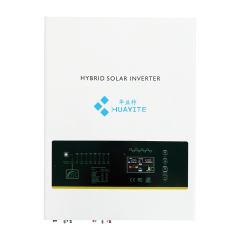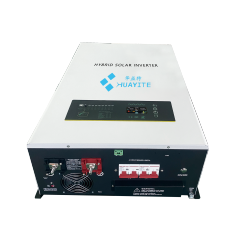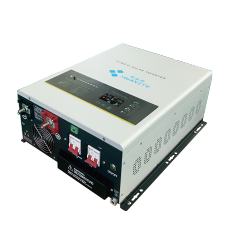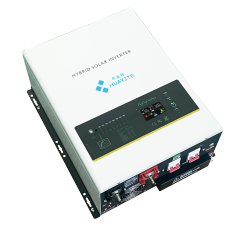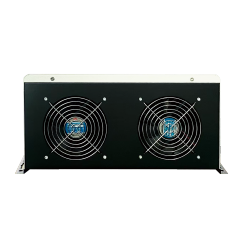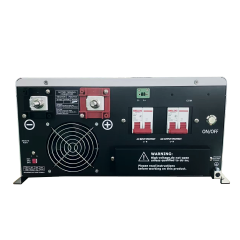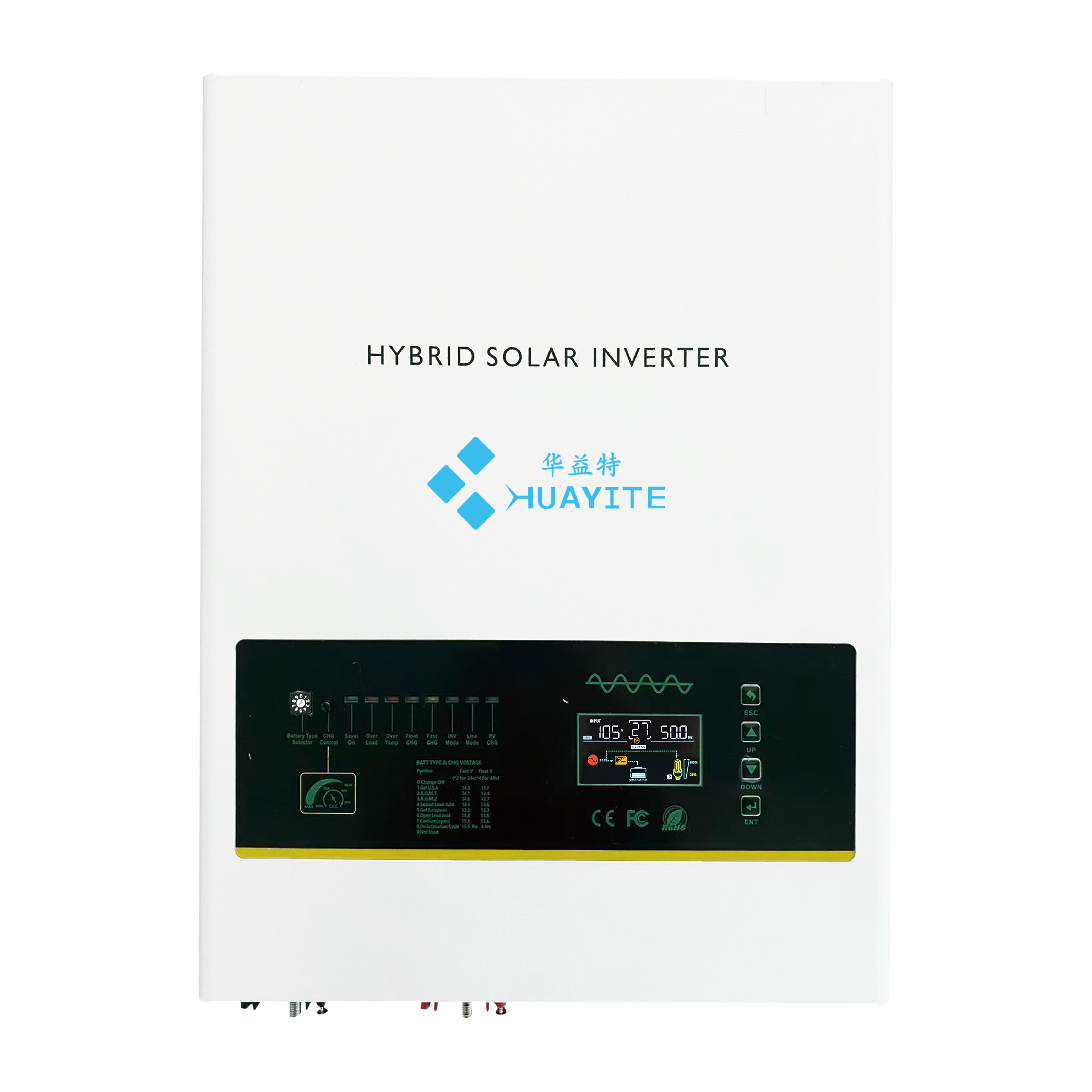
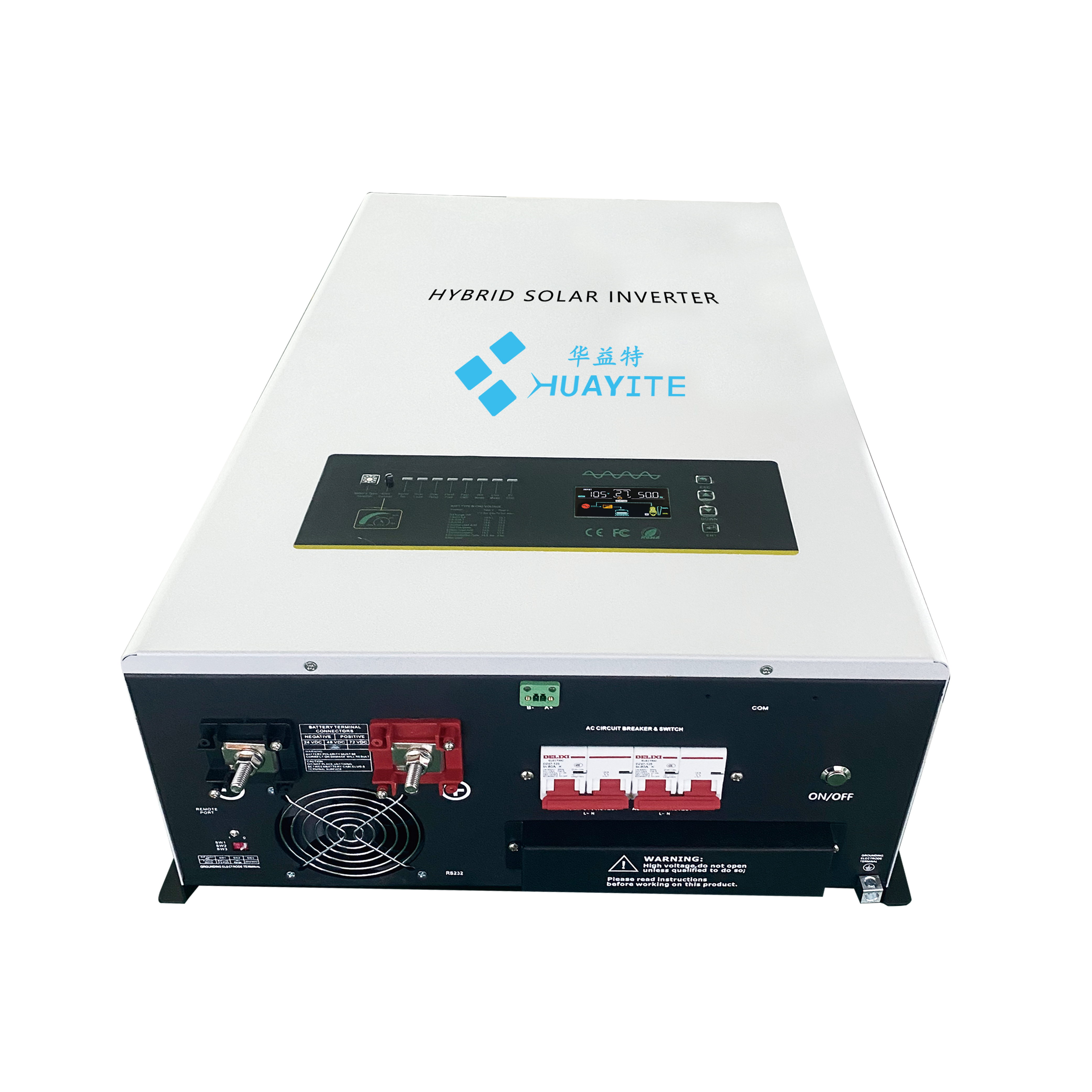
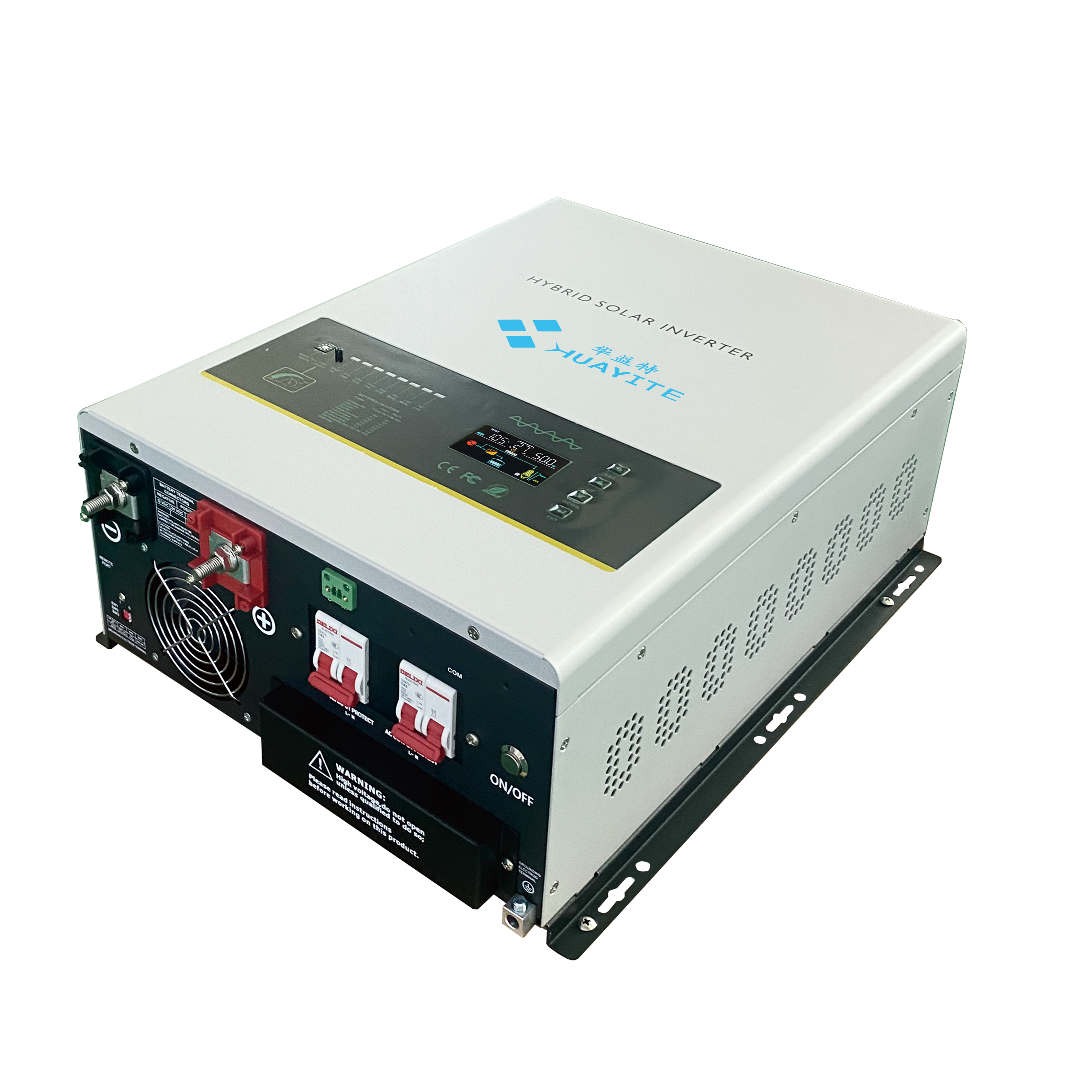
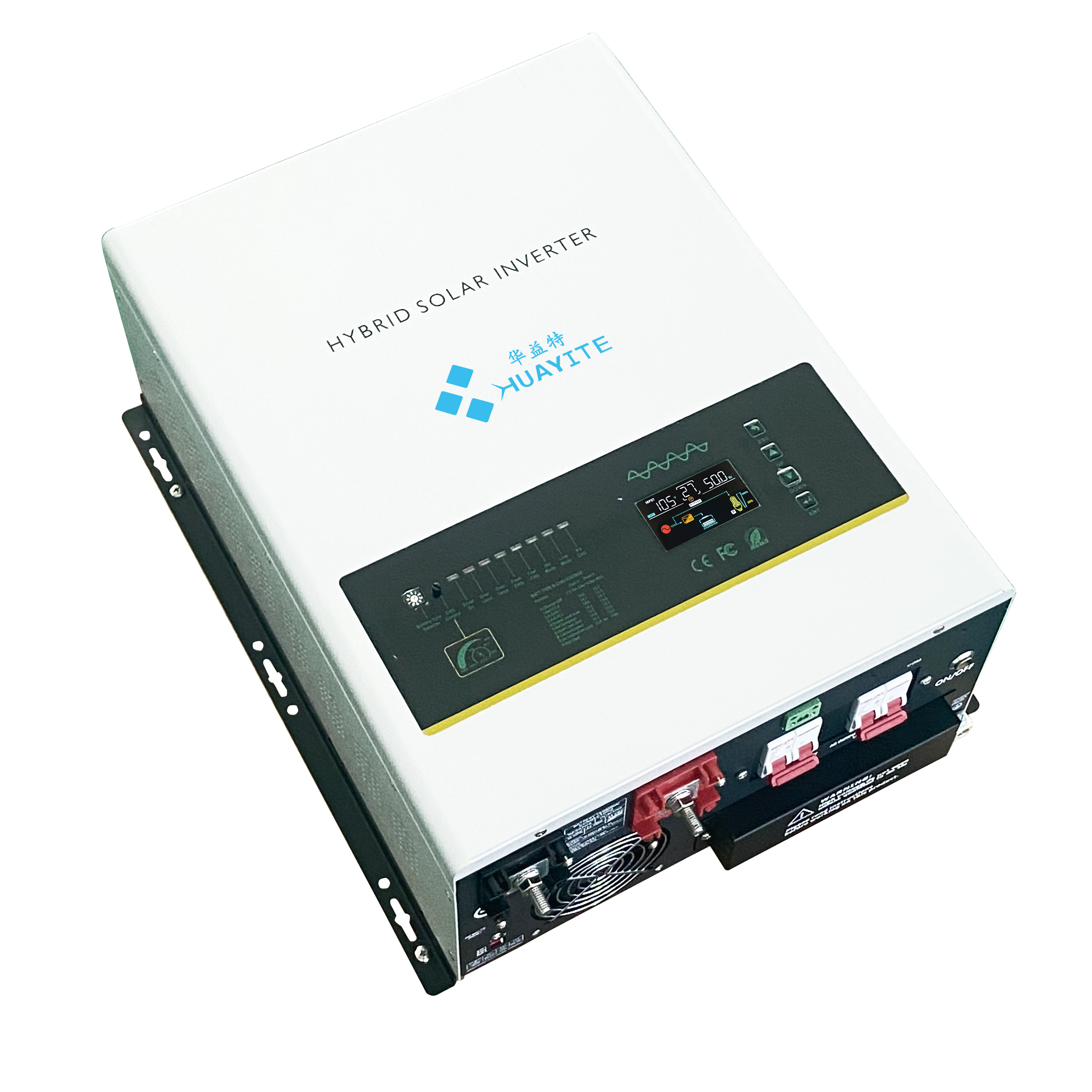
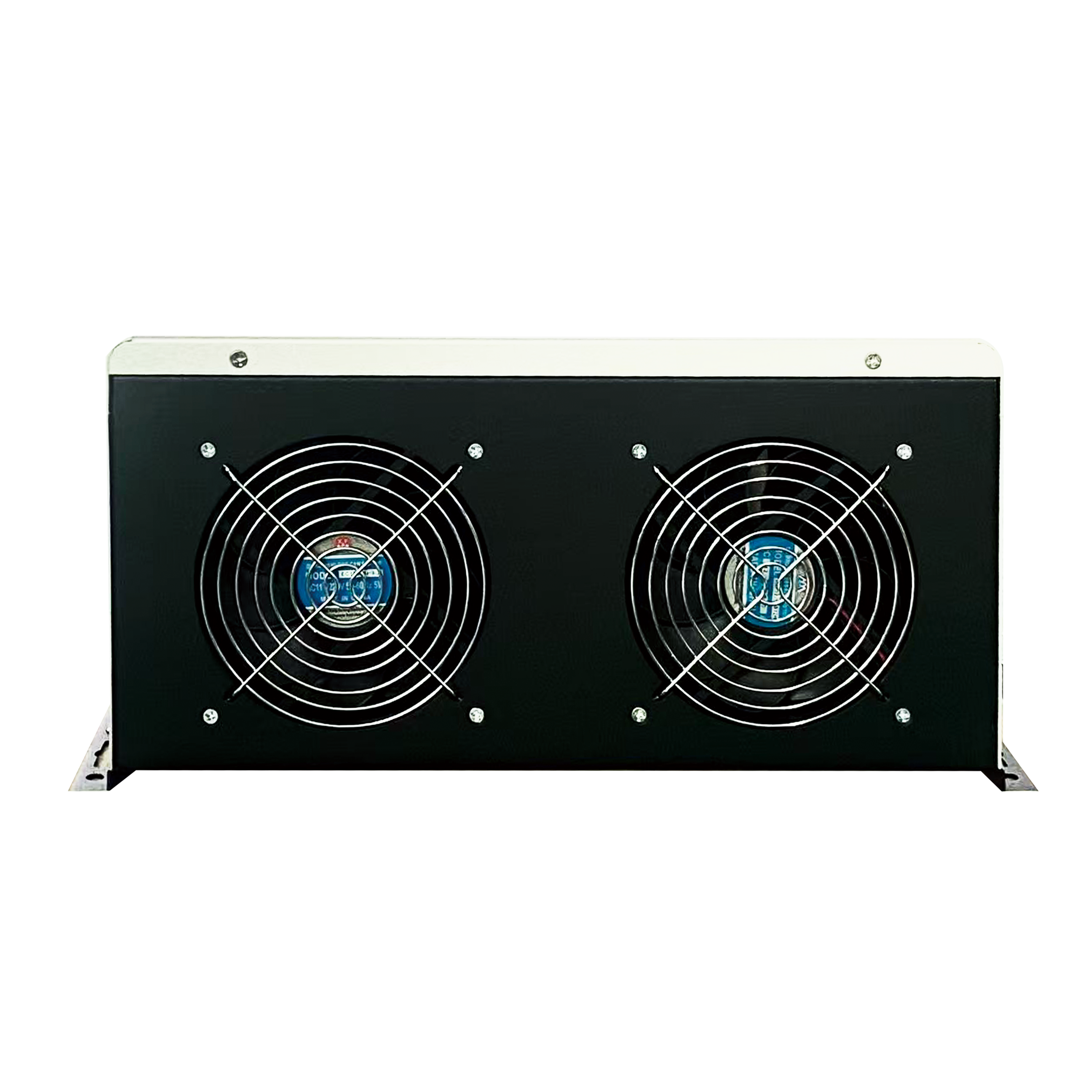
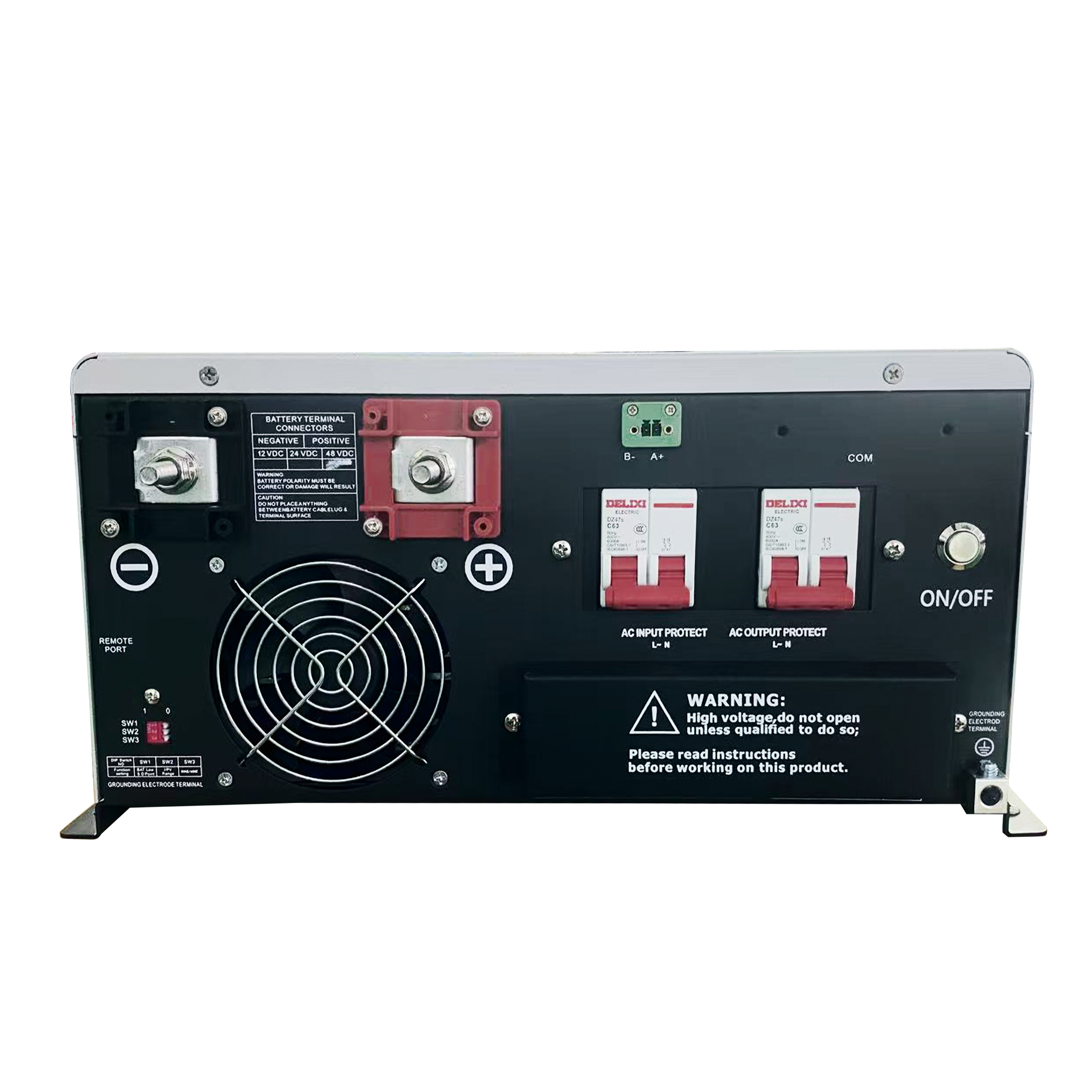

 lt has four functions of utility bypass, utility charging, inverter,Solar charging and UPs, and it can switch automatically Compared with ordinary power frequency series, the efficiency is 3 ~ 5% higher and the selfconsumption is 30 ~ 50% lower Dip switch selection: battery under voltage point, input AC range, energy saving mode, priority mode Remote communication interface RJ11 /R45 / RS232 / 485 remote control panel (optional) Support PC software monitoring, support WlFl 4G module expansion to realize app cloud monitoring(optional) Pure sine wave output, input and output completely isolated design Incuding AC four stage charging mode, charging current can be adjusted automatically
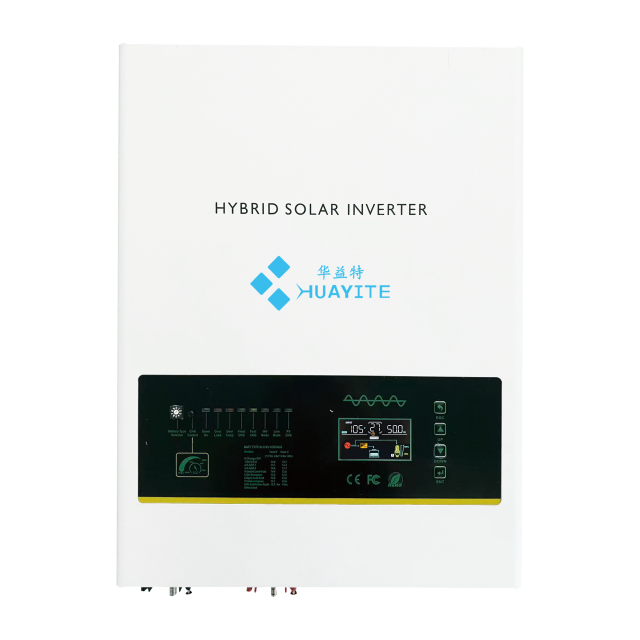
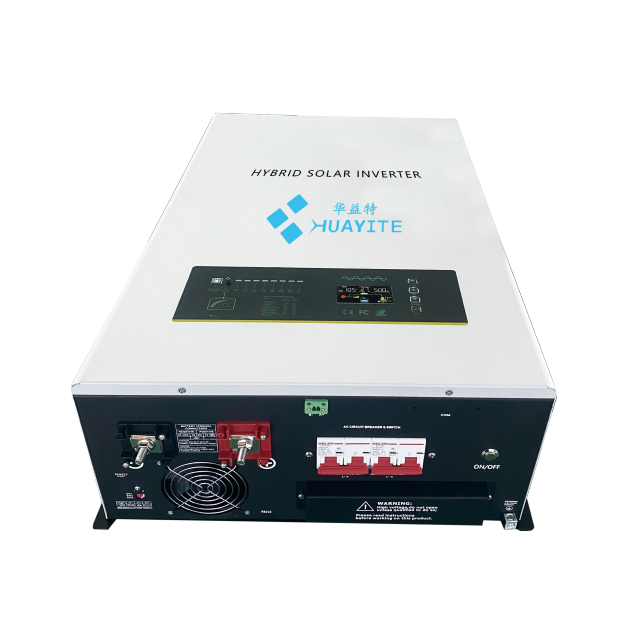
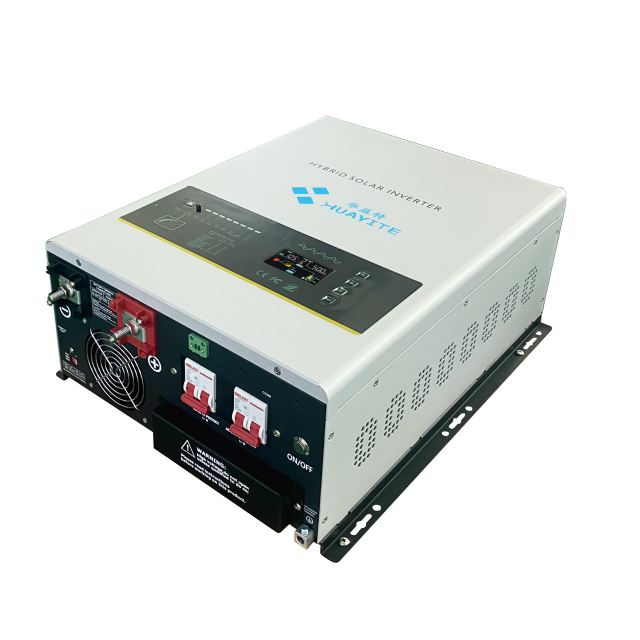
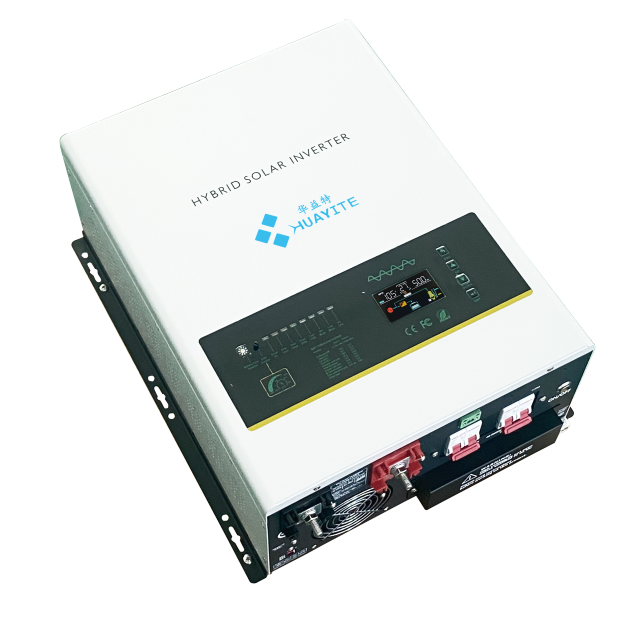
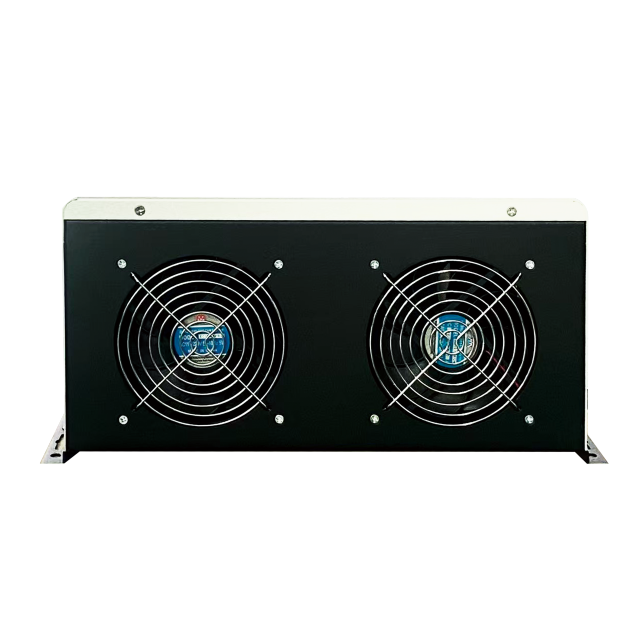
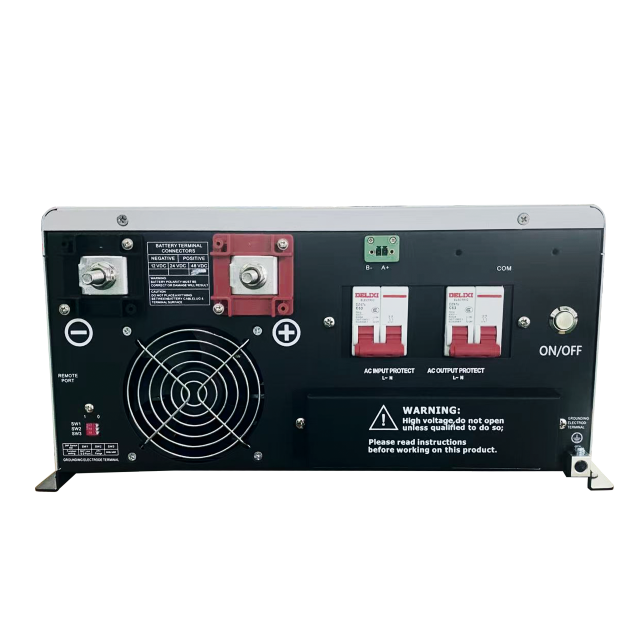
The HS-PV series is a wall-mounted power centre for homes, shops and small industrial sites where the grid is missing, weak or simply unreliable. One cabinet does four jobs that would otherwise need separate boxes: utility bypass, mains battery charging, DC-to-AC inversion and automatic UPS changeover. Connect a PV array and a battery bank and the system is complete — a single solar inverter charge controller replaces the inverter, the controller and the changeover panel that would otherwise hang on three different walls. Each one is built around a transformer stage, with the DC input and AC output fully isolated; that keeps the waveform a clean sine wave and gives the unit headroom for motor and compressor starts. Battery banks sit at 12, 24 or 48 Vdc depending on the model, and the AC input is set for a 100–120 V or a 220–240 V nominal supply at commissioning. Because the charging stage lives in the same enclosure, a PV array connects straight to the unit through the optional MPPT charger, while the mains charger tops the bank up when there is no sun. The same solar charge controller manufacturers build the charging stage and the inverter stage, so the charge profile, the display and the protection set are matched at the design stage instead of being bolted together afterwards. For a distributor the value is one product family covering a whole power ladder with the same wiring logic, the same front panel and the same spare-part set. - Four functions in one enclosure. Utility bypass, mains charging, inversion and UPS changeover share one cabinet, one AC feed and one battery run. - A low frequency solar inverter with full isolation. The transformer separates the DC input from the AC output and holds a clean sine wave under load, so pumps, compressors, telecom rectifiers and instruments all see a supply they can run on. - Peak efficiency above 88 %. Conversion losses between the battery and the load stay low, which matters most on a site that runs around the clock. - A wide, selectable AC window. The input can be set to 90–135 VAC or 154–264 VAC, so a solar inverter charger keeps working on a supply that swings well outside a nominal 230 V. - Charging that adapts to the bank. AC charging uses a four-stage profile with automatically adjusted current. Specifying the optional solar stage turns the cabinet into an inverter with mppt charge controller built in rather than bolted on. - Built for a wall, not a rack. This off-grid solar inverter keeps the control panel on the front and every termination on the rear panel, keeping cable routes short and service access simple.
| Rated power | Peakpower | Battery system voltage | Max MPPT solar charger current (optional) | Max solar input voltage |
| 1.0 kW | 3000 VA | 12/24/48 VDC | 40 A | 100 V |
| 2.0 kW | 6000 VA | 12/24/48 VDC | 60 A | 150 V |
| 3.0 kW | 9000 VA | 24/48 VDC | 60 A | 150 V |
| 4.0 kW | 12000 VA | 24/48 VDC | 60 A | 150 V |
| 5.0 kW | 15000 VA | 24/48 VDC | 60 A | 150 V |
| 6.0 kW | 18000 VA | 24/48 VDC | 60 A | 150 V |
| 8.0 kW | 24000 VA | 48 VDC | 100 A | 230 V |
| 10.0 kW | 30000 VA | 48 VDC | 100 A | 230 V |
| 12.0 kW | 36000 VA | 48 VDC | 100 A | 230 V |
Weak-grid homes and small shops
Where the supply sags to 150 V or drops out several times a day, this off-grid solar inverter charges when the grid is present, inverts when it is not, and hands the load back automatically. A 3 kW or 5 kW model will usually carry lighting, refrigeration, a pump and a few power tools, and the cabinet works as a solar inverter charger during the day and as a UPS after dark. Telecom and security sites Base stations, radio sites and CCTV hubs need a supply that does not blink. The low frequency solar inverter's transformer stage and isolated output carry rectifiers and recorders through a changeover, and the optional remote panel saves a site visit when an alarm comes in. Farm and water systems Borehole pumps and irrigation motors draw several times their rated current for a second or two at start, and the pure sine wave inverter output is what keeps their controls and contacts on a steady supply through that surge. Light industrial and workshop loads Compressors, low-duty welders and bench tools all bring inrush that rewards a transformer-based design, and the cabinet — inverter, solar inverter charge controller and transformer — is sized for that pattern of use rather than for resistive loads alone. Where this cabinet is more than the job needs A cabin, kiosk or single-room backup that only needs a few hundred watts is better served by a smaller wall mounted solar inverter — the HX-PV Series Solar Inverter in the same range covers that end without paying for capacity the site will never draw.
| Parameter | Specification |
|---|---|
| Rated power | 1.0KW |
| Surge power | 3000VA |
| Output waveform (pure sine wave inverter) | Pure sine wave / same as input (bypass mode) |
| Inverter efficiency (peak) | >88% |
| Power factor | 0.9-1.0 |
| Nominal output voltage RMS | 100V / 110V / 120VAC / 220V / 230V / 240VAC ±5% (RMS); 220V / 230V / 240VAC ±5% (RMS) on the 8–12 kW models |
| Output frequency | 50Hz ± 0.3Hz/60Hz ± 0.3Hz |
| Typical transfer time | 10ms(max) |
| AC input voltage | 100V / 110V / 120VAC / 220V / 230V / 240VAC; 220V / 230V / 240VAC on the 8–12 kW models |
| Selectable voltage range | 90-135VAC / 154-264VAC; 154-264VAC on the 8–12 kW models |
| Frequency range | 50Hz / 60Hz |
| Nominal battery system voltage | 12/24/48VDC (1–2 kW), 24/48VDC (3 kW), 48VDC (4–12 kW) |
| Mounting | Wall mount |
| Warranty | 2 year |
Choosing the right unit for a site starts with a conversation, not a catalogue number. Share your load profile, battery voltage and backup requirement, and our engineers will help you match a model from our full range and confirm the accessories that go with it. The same Shenzhen-based team, with in-house R&D and more than 20 years in the industry behind them, stays with you after delivery: wiring and commissioning guidance, fault diagnosis, and spare-part support for units already in service. For private-label projects, they also handle artwork and specification approvals before production.
The cabinet is complete for conversion, charging and changeover — no separate changeover panel and no external mains charger. The MPPT solar charging stage is an option ordered with the unit, and the PV array and battery bank are supplied separately to suit the site. Once those three pieces are in place, nothing else is needed between the panels and the loads.
Yes. The low-frequency transformer stage is what makes that possible: a pump or compressor draws several times its rated current for a second or two at start, and the surge rating on each model covers that inrush. Size against the motor's starting current rather than its running current. As solar pv inverter manufacturers we work from the load list, so send it over if you want the figures checked before you order.
A priority setting decides. In solar priority the array works first through the optional MPPT charger and the mains charger only takes over when the panels cannot keep up; in mains priority the charger holds the bank at full and the array contributes on top. Switching between the two is a site decision rather than a factory one, so a solar inverter charger like this can be re-prioritised as the installation evolves. Either way the unit works as a solar charge controller inverter with two charging inputs feeding the same bank.
Four things: the battery under-voltage point, the AC input voltage range, the energy-saving mode and the priority mode. That covers the adjustments most sites actually need — a 154–264 VAC window for a weak supply, a deeper discharge for a larger bank, or a change of charging priority — without a laptop or a service visit.
The unit senses the return, checks the incoming supply against the selected voltage window and frequency, and transfers the load back to bypass; the charger then resumes its four-stage cycle. Changeover is automatic in both directions, so nobody has to be on site to reset anything. As a solar inverter charge controller it also keeps the battery thresholds active throughout, so a returning grid cannot push the bank above its high-voltage alarm point.
Very little beyond keeping the rear cooling fans and their grilles clear of dust and checking terminal torque at the annual service. Battery maintenance follows the bank you install, not the inverter. As solar pv inverter manufacturers we keep fans, control boards and front panels available as service parts, so a repair stays a repair rather than becoming a replacement.
The solar stage is MPPT and it is rated per model, from 30 A on the 1 kW unit up to 100 A on the 8–12 kW units, with maximum solar input voltage of 100 V, 150 V or 230 V depending on the rating. Match array voltage and current to the model you order — both figures sit beside each rating in the model range. Because we are the solar charge controller manufacturers for this stage as well as the inverter, an inverter with mppt charge controller configuration here is matched at the design stage rather than assembled from two suppliers' parts.
Energy-Saving Advantage: 3-5% higher efficiencyIndustrial-Grade Protection: Relay + circuit breakers with multi-protectionClear System Monitoring: LCD+LED Dual Display, WIFI/4G remote controlPure Sine Wave & Isolated DesignHigh-Efficiency MPPT Solar Control: Built-inAdvanced Remote Management (Optional): RJ11/RJ45/RS232/485