1–12 kW Inverter-Charger Selection Guide

Solar Inverter Charger – 1 – 12 kW Inverter-Charger

1–12 kW Inverter-Charger Selection Guide

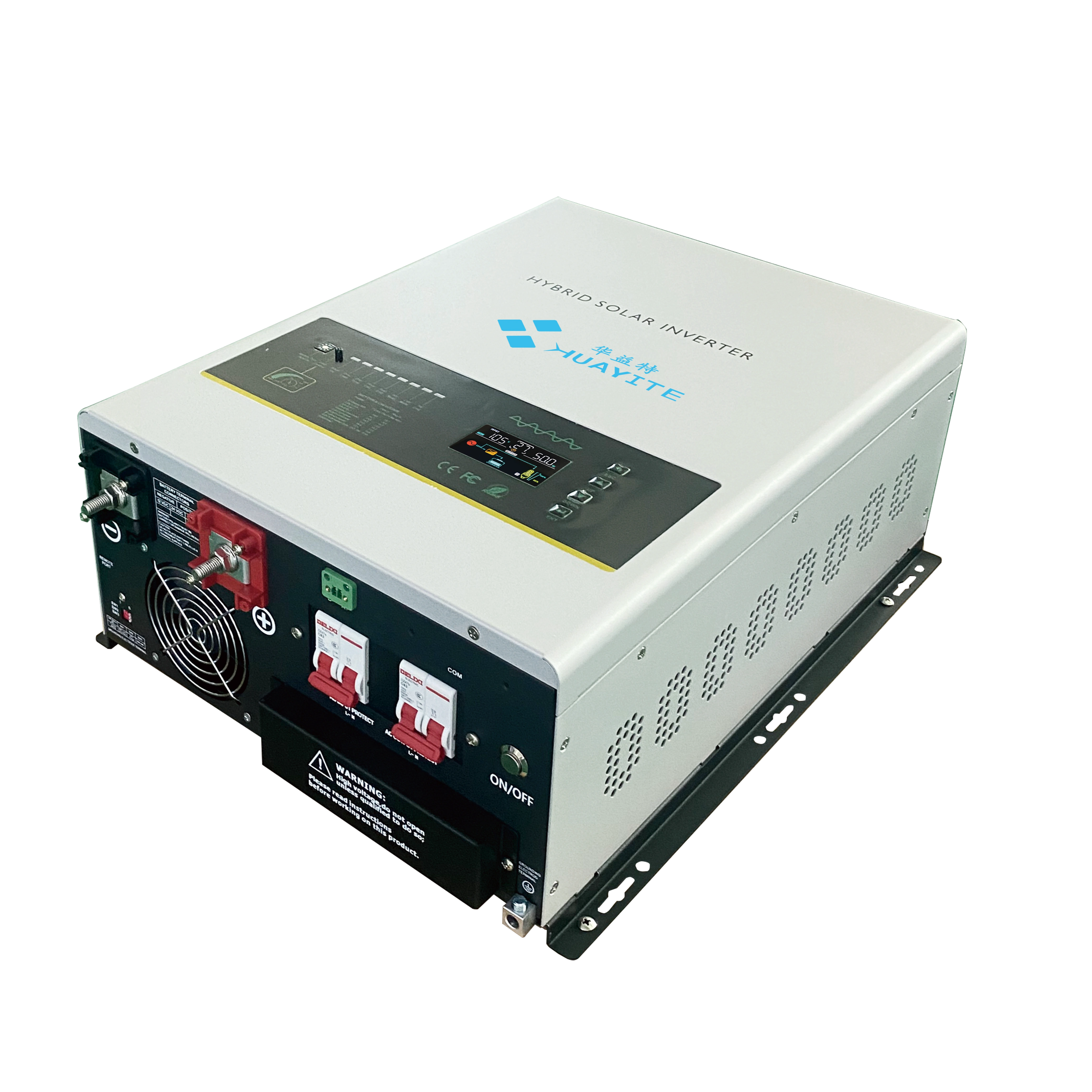
The HS-PV series is a low-frequency solar inverter charger that combines utility bypass, a four-stage AC charger, a pure sine wave inverter and rapid UPS-style switching in one wall-mount unit, with input and output fully isolated. Buyers who also want the solar side fitted at the factory should treat it as a solar inverter charge controller decision as much as a power decision, because the optional solar charger board is listed from 30 A to 100 A with up to 230 V PV input — so array voltage and array current narrow the model list as quickly as load kW does.

HS-PV Series Low frequency solar inverter with charger control Integrated Machine

What “integrated machine” actually means

In this series, one chassis performs four jobs: it bypasses utility power to the load, charges the battery bank from the grid, inverts DC back to AC, and switches the load to backup when the utility drops. That is why the range is described as a four-in-one integrated machine rather than a plain inverter. Everything on this page sits inside that single ladder — the HS-PV series from 1.0 kW to 12.0 kW, pure sine wave output, isolated input and output, and automatic switching between utility and inverter operation.

All nine HS-PV models on one table

Use this as the shortlisting table. Rated power sets your continuous load, surge VA sets your motor-start headroom, and the last two columns decide whether your PV array can be connected directly or needs a separate controller.

Model Rated power Surge power Max solar charge current (optional) Max PV input voltage Net weight
HS-PV1000W1.0 kW3,000 VA30 A100 VDC19 kg
HS-PV2000W2.0 kW6,000 VA50 A150 VDC21.3 kg
HS-PV3000W3.0 kW9,000 VA60 A150 VDC25.7 kg
HS-PV4000W4.0 kW12,000 VA60 A150 VDC33 kg
HS-PV5000W5.0 kW15,000 VA60 A150 VDC35.2 kg
HS-PV6000W6.0 kW18,000 VA60 A150 VDC36.5 kg
HS-PV8000W8.0 kW24,000 VA100 A230 VDC60.9 kg
HS-PV10000W10.0 kW30,000 VA100 A230 VDC63.5 kg
HS-PV12000W12.0 kW36,000 VA100 A230 VDC65.9 kg

Surge power follows a 3:1 ratio to rated power across the ladder. Transfer time is listed as 10 ms maximum for the series, output waveform is pure sine wave (bypass output matches the input), power factor is 0.9–1.0, and nominal battery system voltages are listed as 12/24/48 VDC with 48 VDC configurations also published. Net weight is the unit before packaging. Confirm the current figure for your chosen model when you request the quote.

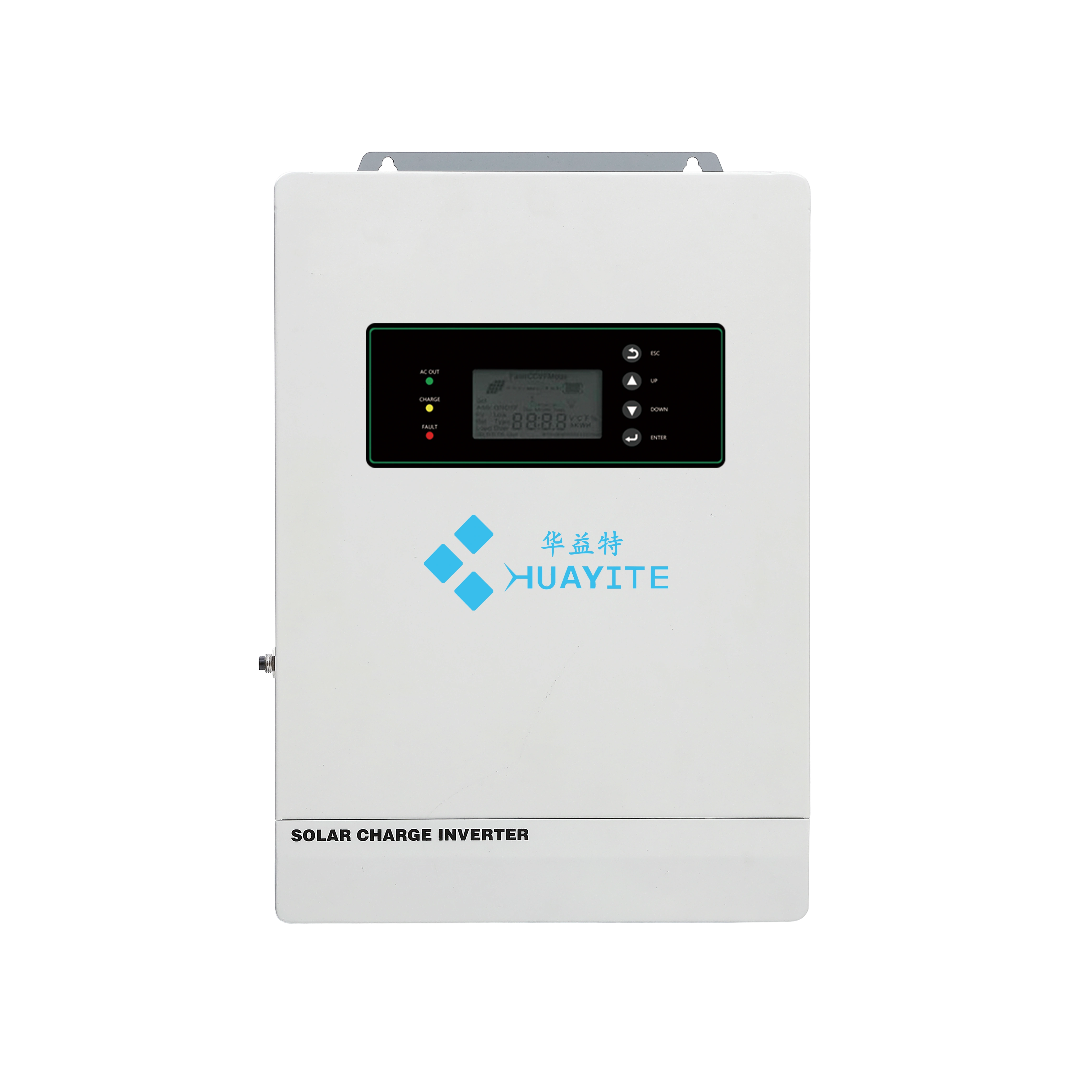
HS-PV integrated inverter charger front view

AC charging, solar charging, or both at once

  1. Four-stage AC charging. Grid charging runs a four-stage profile, and charge current is adjusted automatically rather than set once by hand.
  2. Optional solar charging. Where the board is fitted, maximum solar charge current is 30 A (1 kW), 50 A (2 kW), 60 A (3–6 kW) or 100 A (8–12 kW), with maximum PV input of 100 V, 150 V or 230 V depending on the model in the table above.
  3. Priority mode. Main control and solar priority modes let the installer decide which source charges first, so the same hardware can be set up for a solar-first site or a grid-first site.
  4. Energy-saving mode. A dip switch setting reduces self-consumption during standby; the same dip switch bank also sets the battery under-voltage point and the input AC range.
  5. Both sources together. AC charging and solar charging can coexist, so a weak solar day does not leave the bank short before the next outage.

Pass/fail check before you shortlist: your string open-circuit voltage must stay under the model’s PV input ceiling, and your array current must stay under the charge current printed for that model. If either number does not fit, step up a chassis size or move to a separate controller instead of adding panels you cannot connect.

Which term do you actually need?

Shoppers arrive using several different names for adjacent hardware. Use this lookup to land on the right product family before comparing specifications.

Term you searched What the hardware does What to shortlist
Integrated machine / inverter charger Bypass, AC charging, inversion and UPS-style transfer in one chassis; solar charging optional. HS-PV series, 1–12 kW
Hybrid inverter with built-in MPPT Inverter with the MPPT charge stage already inside, typically at higher charge current. HB-PV series, built-in 100 A MPPT controller
Stand-alone MPPT charge controller DC-to-DC battery charging only; no AC output and no bypass. HT series, 30–120 A, 12/24/48 V

Five pre-quote checks that decide the model

  1. Continuous load. Add the running watts of everything that must stay on, then pick the rated model above that figure — the ladder runs 1.0 kW to 12.0 kW.
  2. Surge headroom. Surge capacity is three times rated power across the series, from 3,000 VA at 1 kW to 36,000 VA at 12 kW. Motors, compressors and pumps start well above their running watts, so size against the start, not the label.
  3. Battery voltage and DC current. Nominal systems are listed as 12/24/48 VDC. Higher battery voltage halves or quarters the DC current for the same kW, which matters for cable gauge and breaker sizing.
  4. Transfer speed. The series lists 10 ms maximum typical transfer time. Sensitive IT or process loads tolerate far less than lighting circuits, so confirm the load type before ordering.
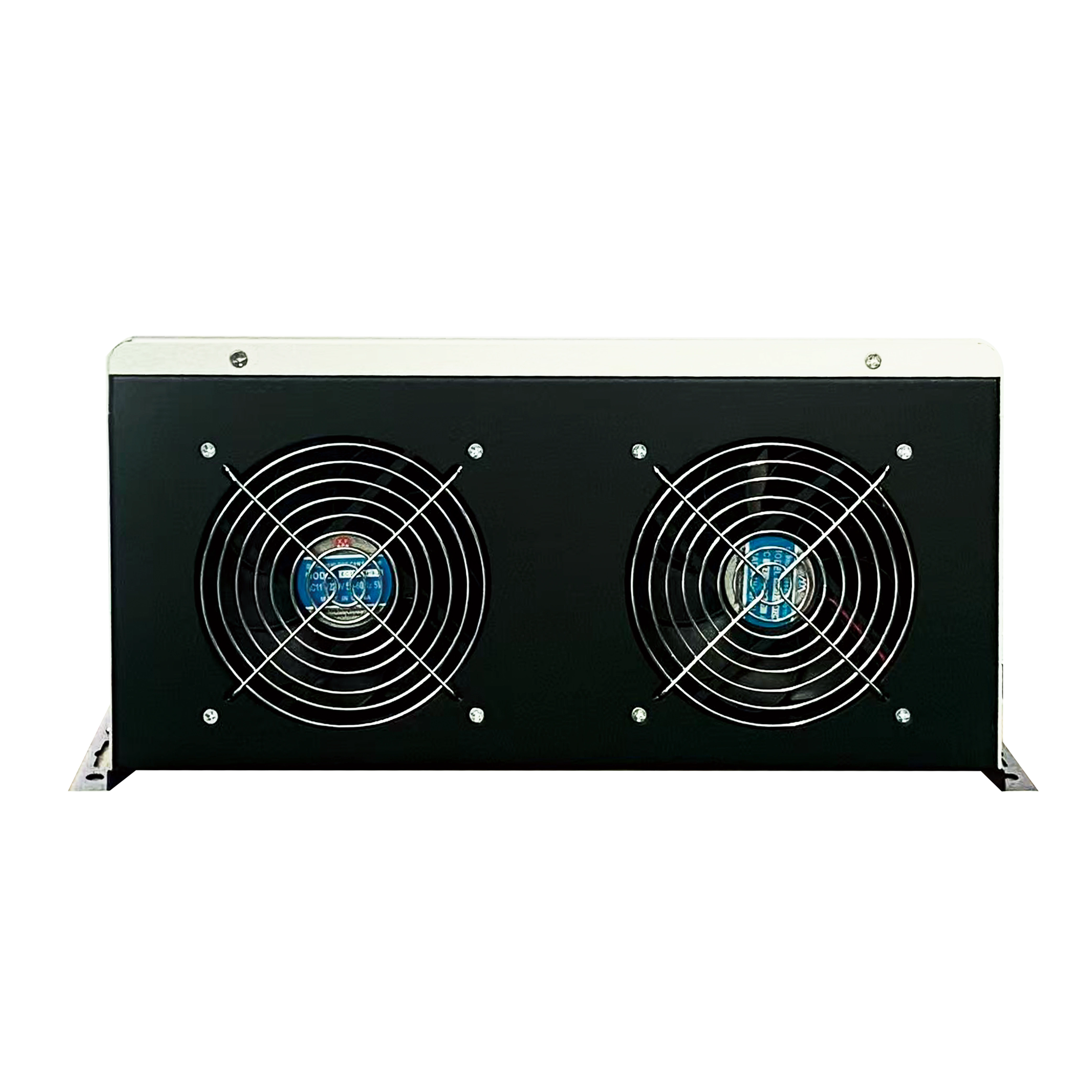
  5. Ambient conditions. Operating range is −10 °C to 40 °C with storage at −15 °C to 60 °C. Plan airflow around the wall-mount position rather than treating it as a closet unit.
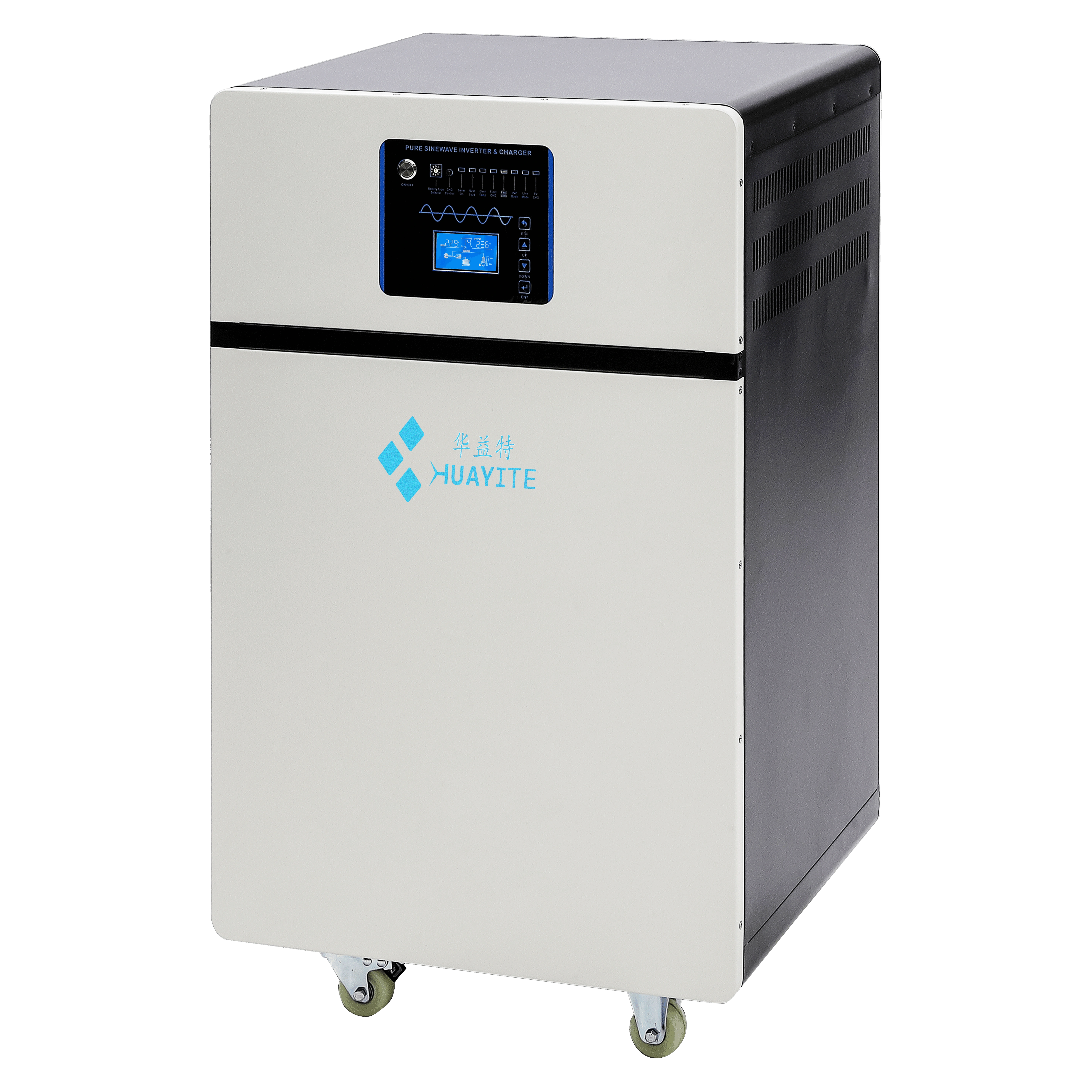
HS-PV integrated inverter charger side view

Installation, battery defaults and distributor facts

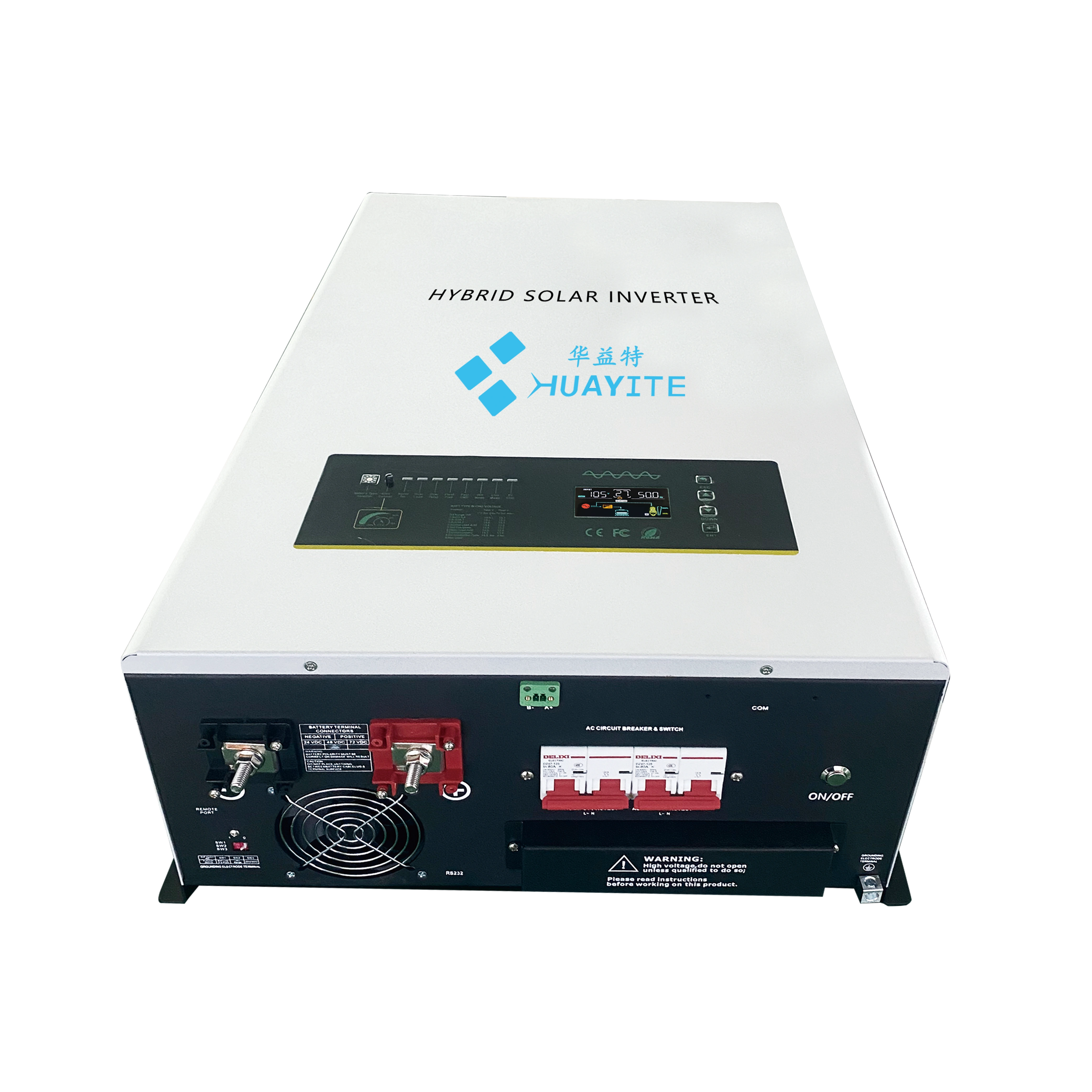
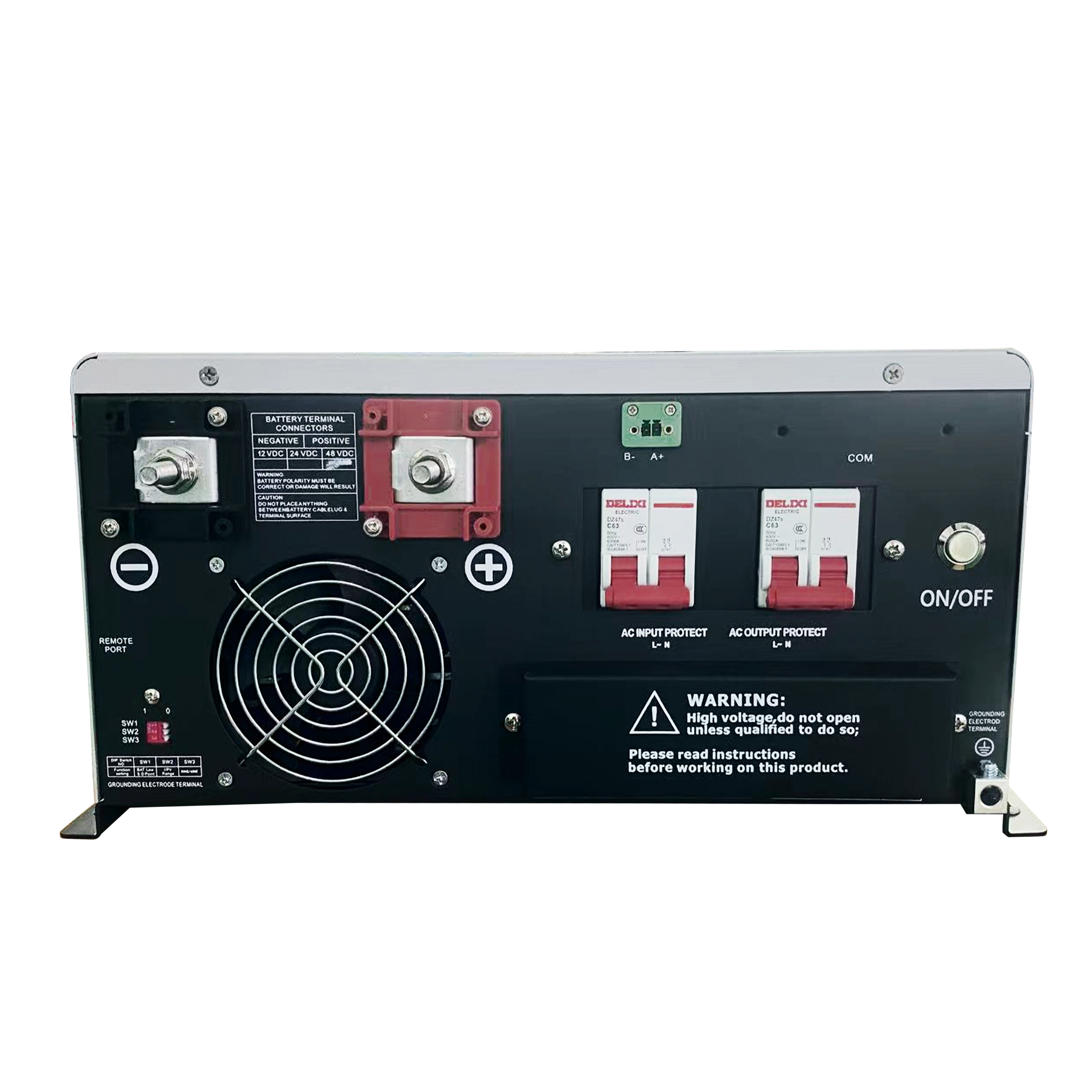
HS-PV integrated inverter charger connection panel

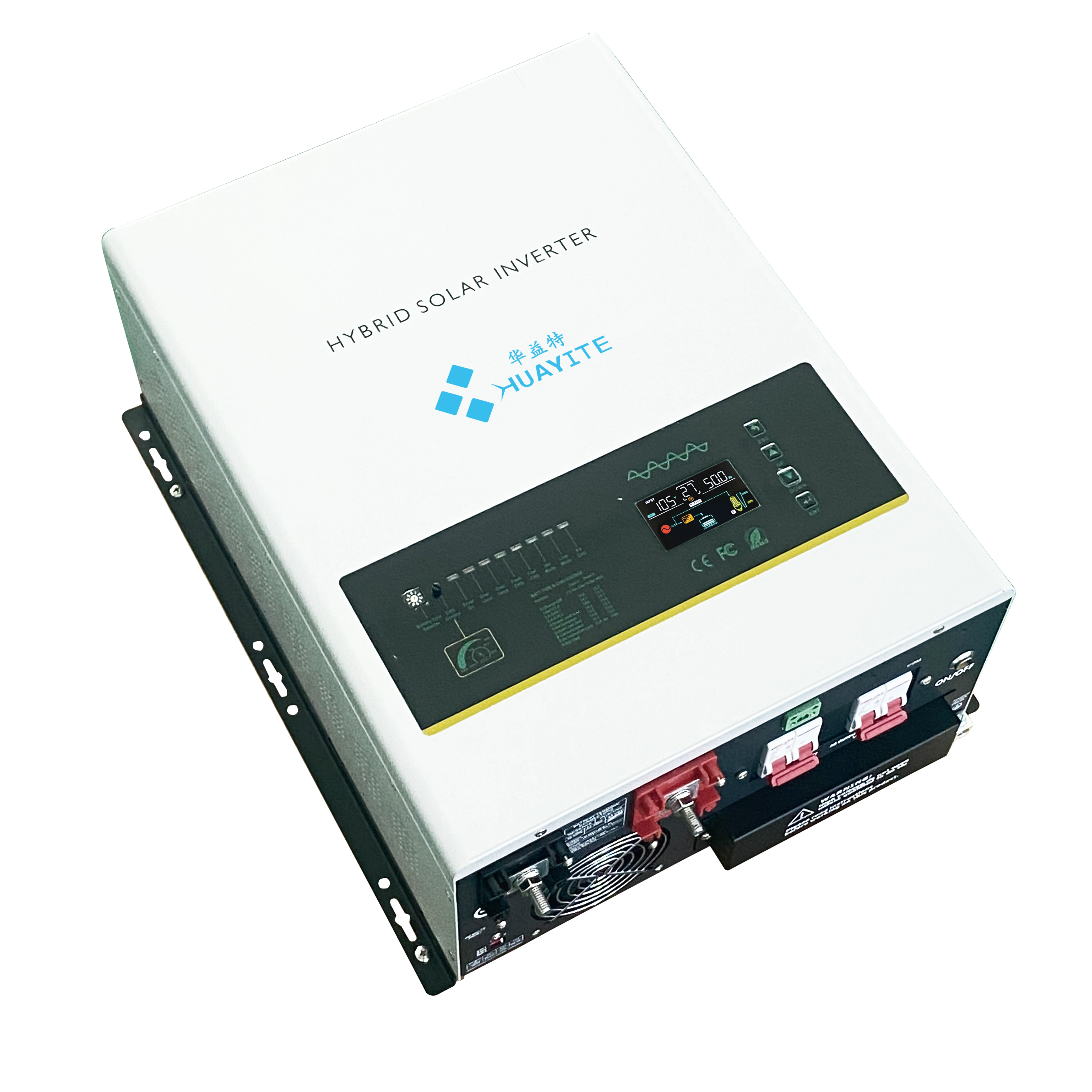
The chassis is wall mount, with LED plus LCD display for local readings. Four chassis sizes appear across the ladder, from 380 × 375 × 200 mm up to 655 × 490 × 240 mm, with net weight from 19 kg to 65.9 kg — plan a two-person lift for anything from the 8 kW model upward.

Remote commsRJ11 / RJ45 / RS232 / 485 remote control panel optional, with PC software monitoring and optional WiFi/4G module for app cloud monitoring.
Low battery alarm10.5 or 11.0 VDC in 12 V mode, ×2 for 24 V and ×4 for 48 V banks.
Low battery cut-off10.0 or 10.5 VDC in 12 V mode; minimum start voltage follows the same scaling.
High battery alarm16.0 VDC in 12 V mode with 15.5 VDC recovery, scaled for 24 V and 48 V systems.
Warranty2 years as published on the product page.
Container loadingSmallest chassis: 509 pcs / 1,054 pcs / 1,236 pcs per 20GP / 40GP / 40HQ.

Voltage, frequency and private-label options

The series is published with 100 / 110 / 120 VAC and 220 / 230 / 240 VAC output variants at ±5% RMS, 50 Hz ±0.3 Hz or 60 Hz ±0.3 Hz. AC input is published as 100 / 110 / 120 / 220 / 230 / 240 VAC with selectable input ranges of 90–135 VAC or 154–264 VAC.

That spread is what makes the platform workable for a reseller catalogue: one product family, several market builds, and an optional solar charger board that can be specified per order. For OEM/ODM discussions, send your target market voltage and frequency, the solar charger current you want, and your annual volume so the factory can quote the build rather than the generic model.

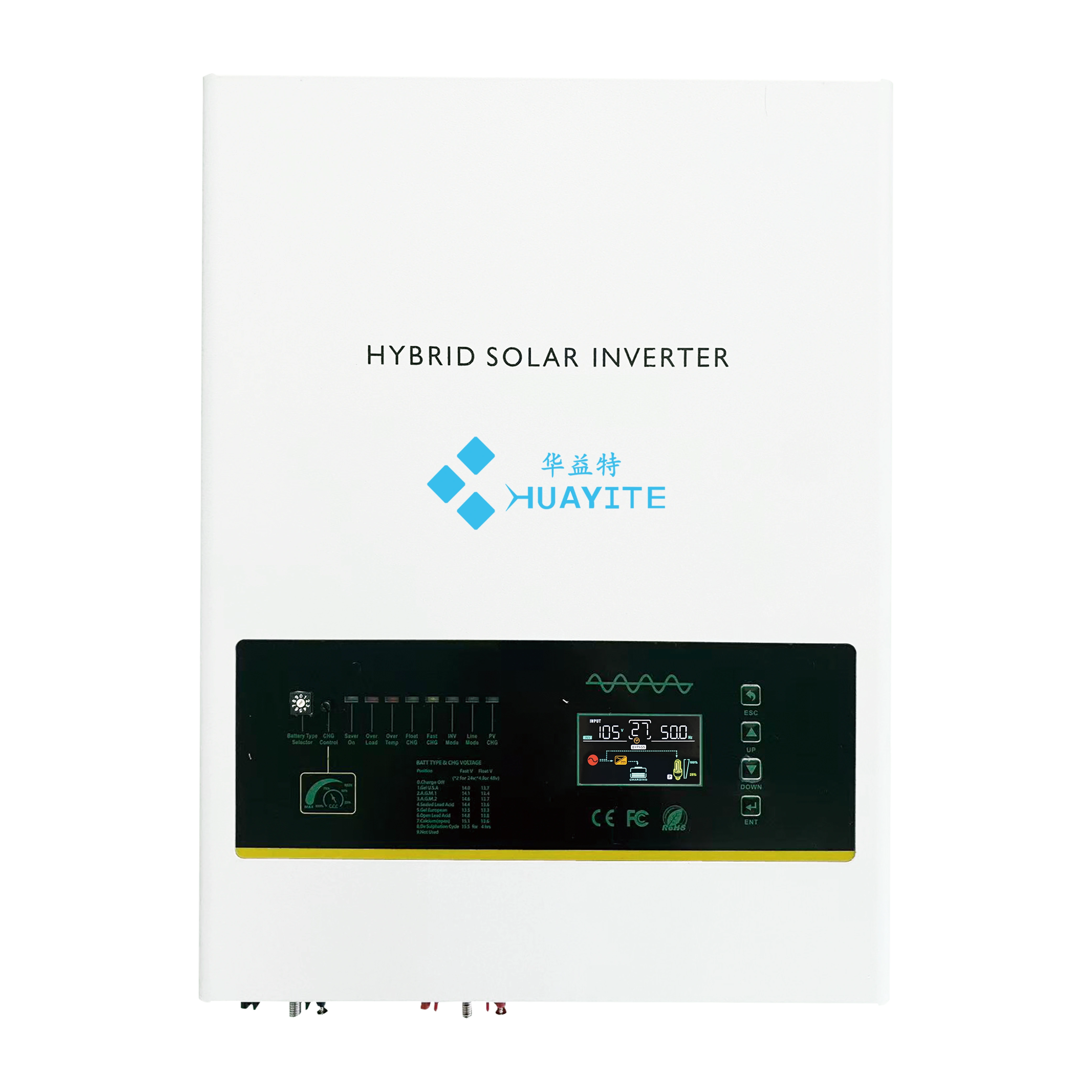
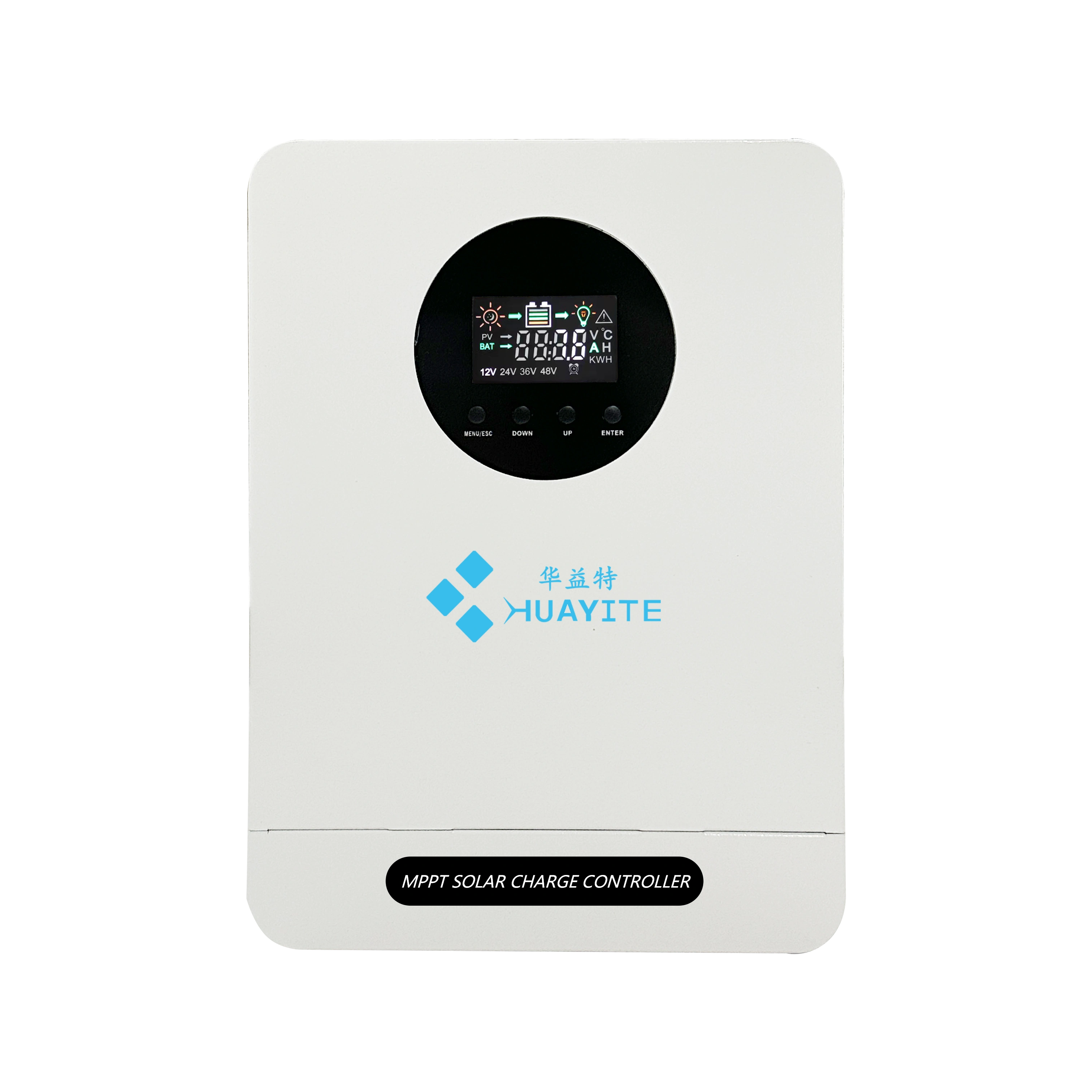
HS-PV integrated inverter charger display and controls

Send your load list and get a matched model

  1. Load list. Continuous watts plus the largest motor start on the site.
  2. Battery bank. Nominal voltage (12 / 24 / 48 VDC), chemistry and capacity.
  3. Array details. String open-circuit voltage and current, if solar charging is required.
  4. Market build. Output voltage, frequency, quantity and destination port.
HS-PV integrated inverter charger product view

Related Reading

Three notes to help clarify product requirements before contacting the supplier.

Pure Sine Wave and Modified Sine Wave Outputs Affect Motor Loads

Waveform shape changes how a motor heats, how much noise it makes, and how much current it asks for during the first seconds of a start.

Read article

How Does a Wall-Mounted Inverter Charger Handle Utility Bypass and UPS Transfer?

Utility bypass, battery charging, inverter output, and UPS transfer are four separate energy paths inside one wall-mounted inverter charger, and their coordination decides how cleanly a commercial…

Read article

Reading Surge Power Ratings on Solar PV Inverter Datasheets

A surge rating describes a short burst of extra current, and reading it correctly is what separates a smooth pump start from a tripped breaker.

Read article

Frequently Asked Questions

Which hs-pv model suits a 5 kw load?

hs-pv5000w is rated 5.0 kw with 15,000 va surge, a 60 a optional solar charger, 150 vdc maximum pv input and a 35.2 kg net weight. check starting currents for motor loads rather than comparing running watts alone.

Is the solar charger included as standard?

it is published as an optional solar and ac charger configuration, listed with maximum solar charge current of 30 a, 50 a, 60 a or 100 a depending on model and maximum pv input of 100 v, 150 v or 230 v. confirm the exact build when you request a quote.

What battery voltages does the series support?

nominal battery system voltage is listed as 12/24/48 vdc, with 48 vdc configurations also published. protection thresholds scale with the bank: alarm and cut-off values in 12 v mode are multiplied by two for 24 v systems and by four for 48 v systems.

How fast does it switch to backup power?

typical transfer time is listed as 10 ms maximum, with pure sine wave output and bypass output matching the utility input. for sensitive equipment, confirm the acceptable interruption window with the equipment supplier.

Can the unit be monitored or remote-controlled?

yes. the unit carries an led plus lcd display, and offers an optional rj11 / rj45 / rs232 / 485 remote control panel, pc software monitoring, and an optional wifi or 4g module for app-based cloud monitoring.

What warranty and shipping information is available?

a 2-year warranty is published for the series. container loading for the smallest chassis is listed as 509 pcs per 20gp, 1,054 pcs per 40gp and 1,236 pcs per 40hq. lead times and shipping terms are quoted per order through the contact page.