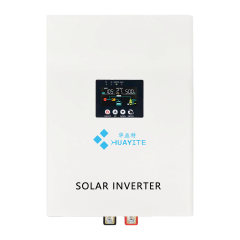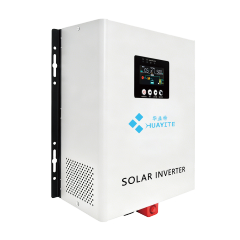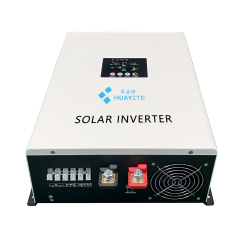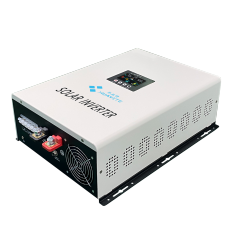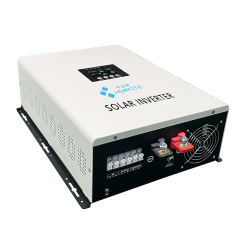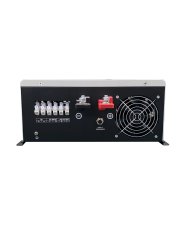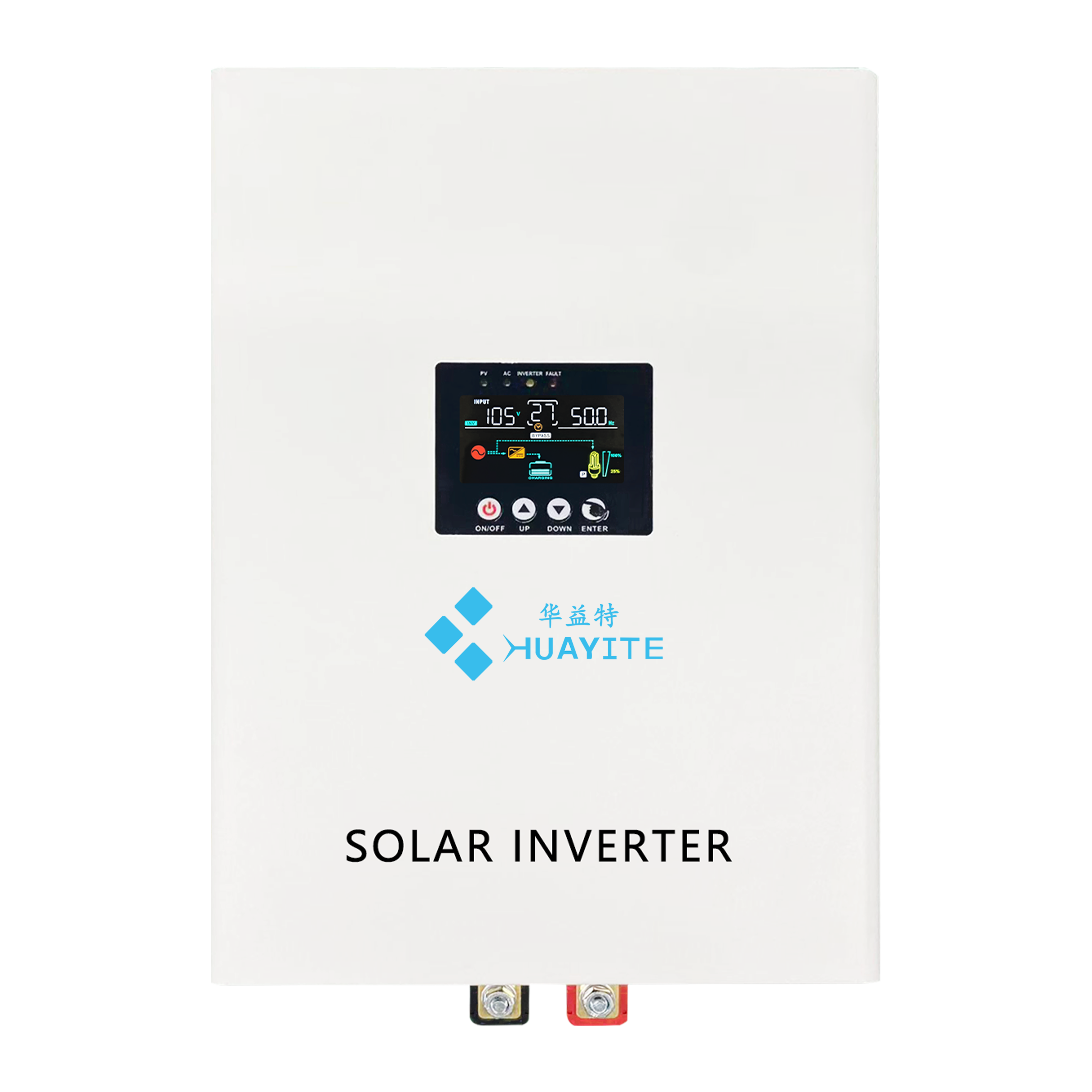
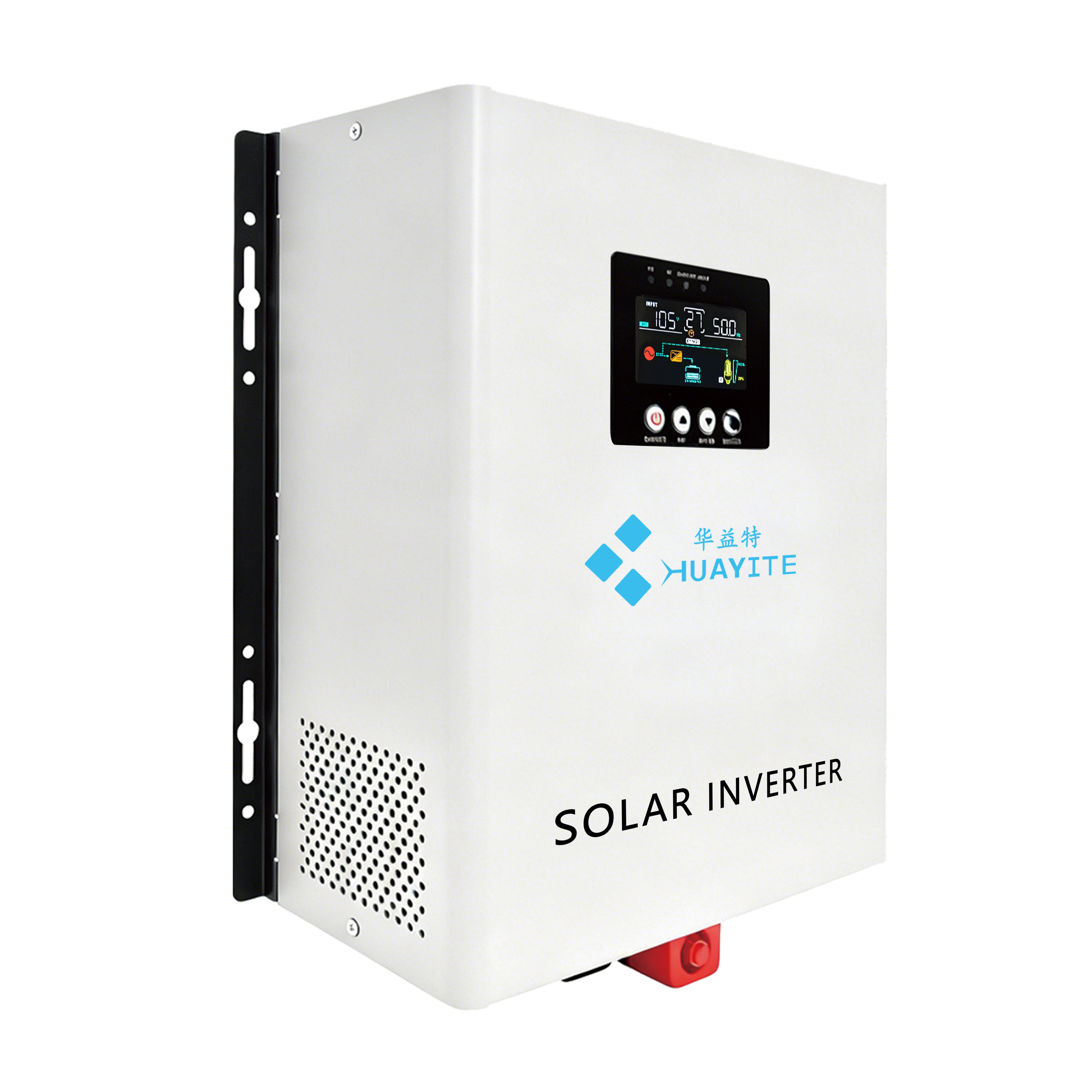
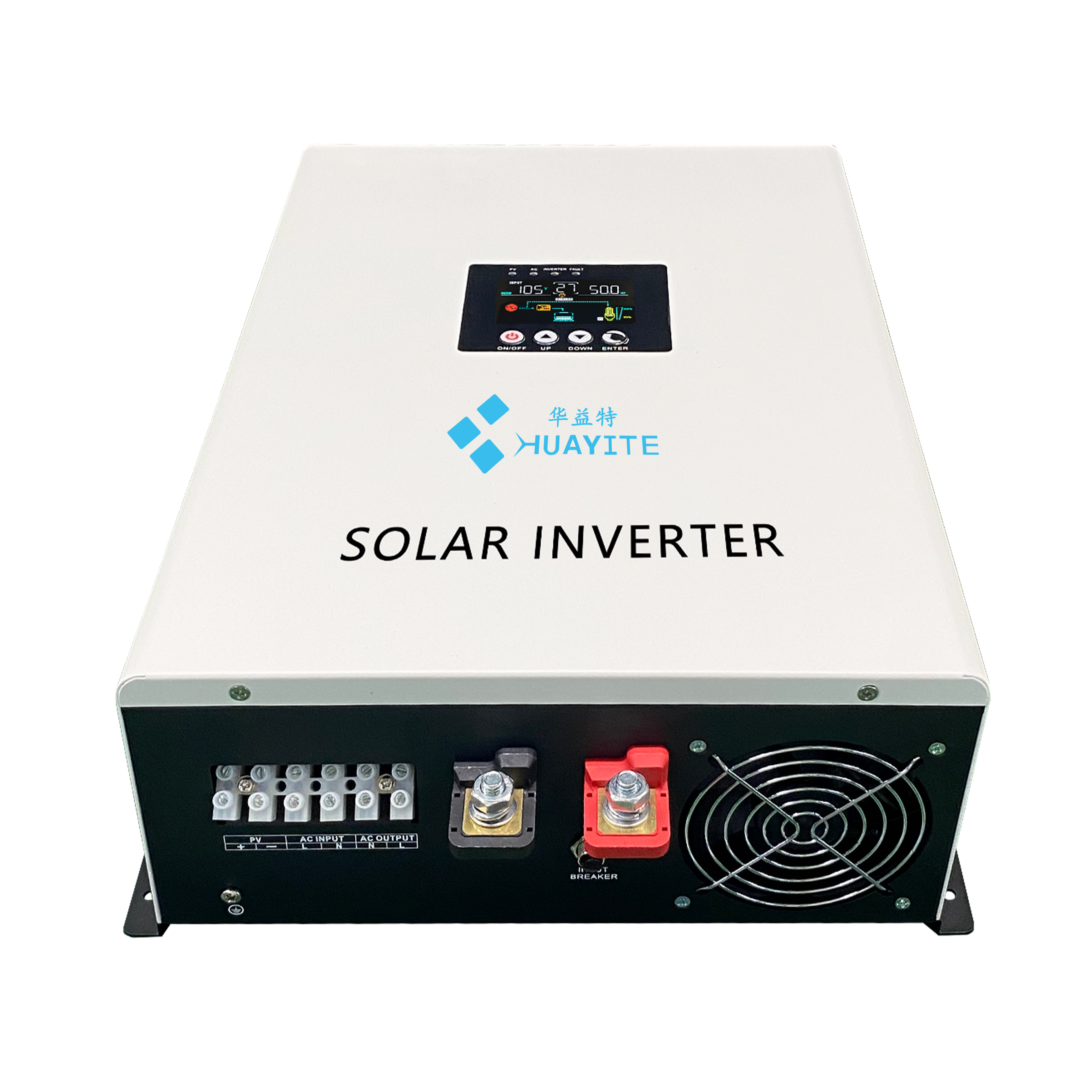
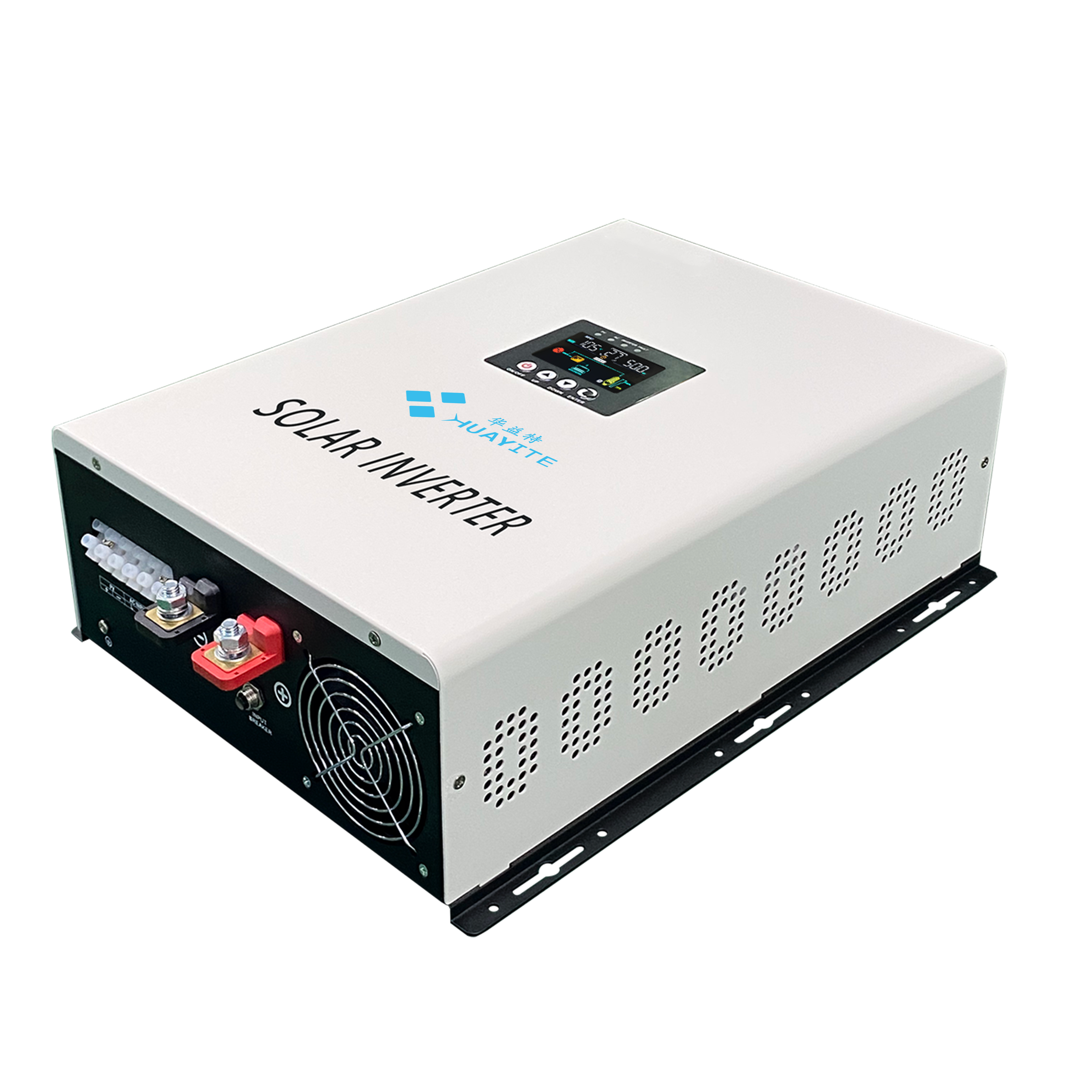
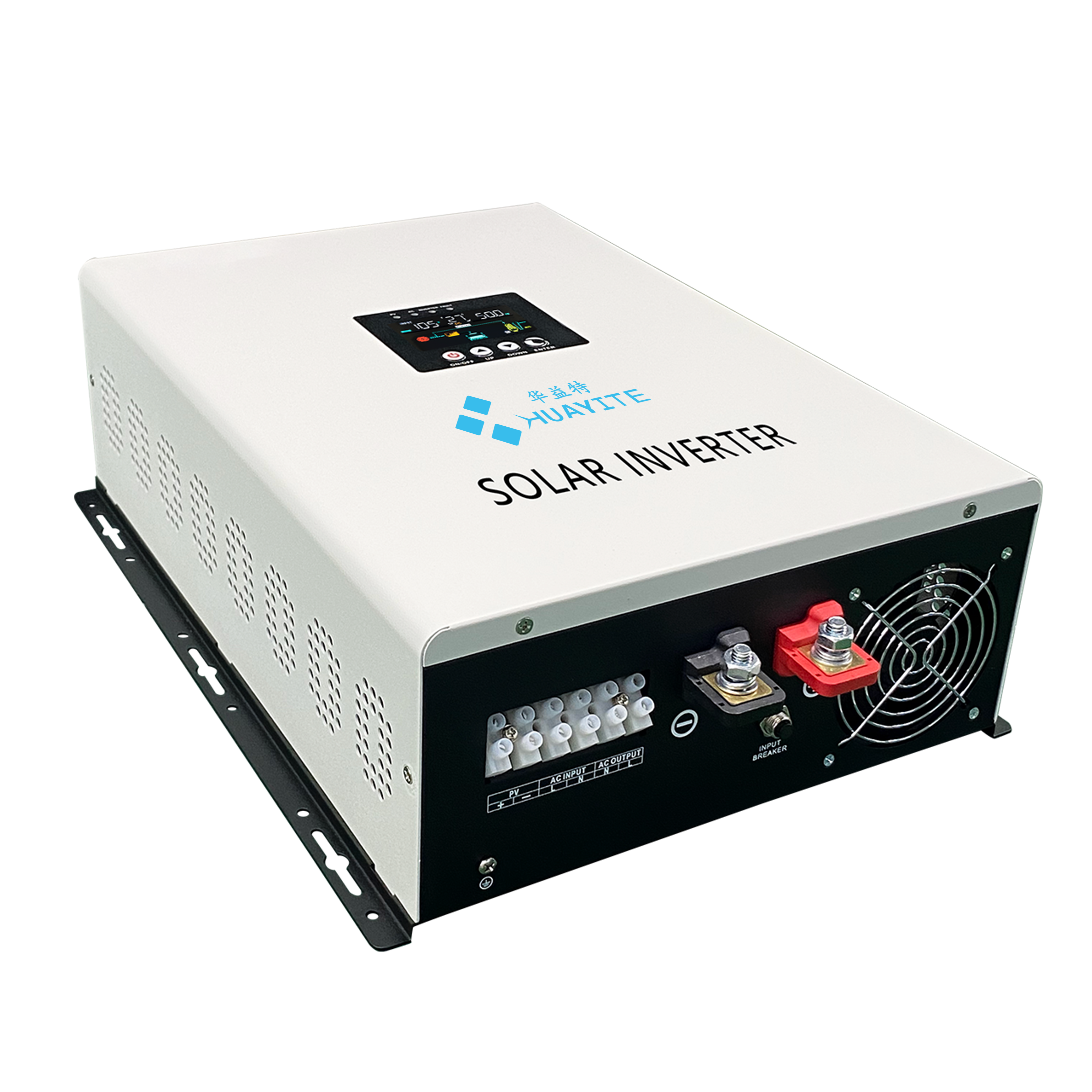
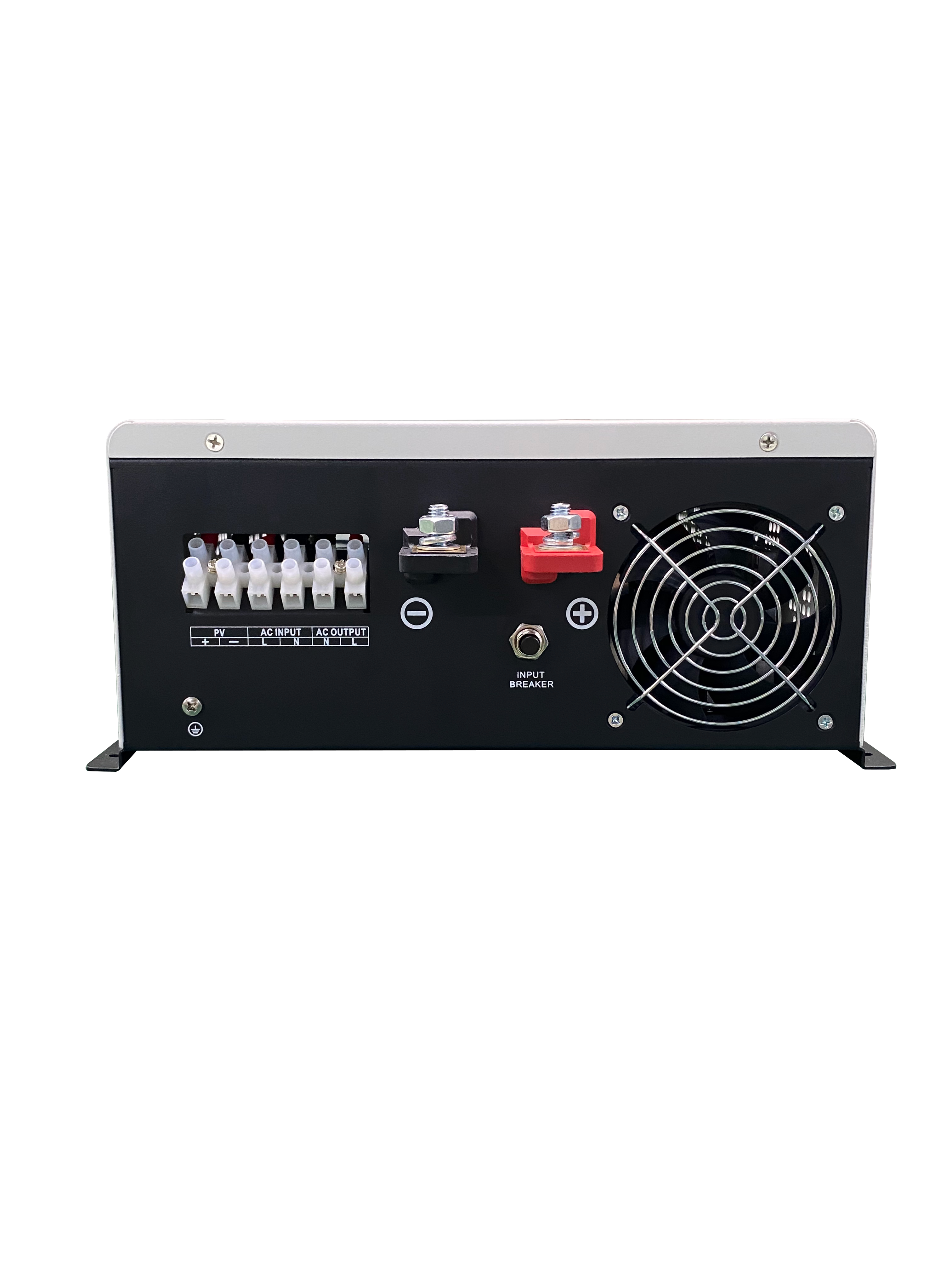

 Off-grid micro inverters are suitable for all types of home and office equipment, vehicle systems and solar systems.Digital CPUintelligent control, intelligent chargingUltra wide Ac input voltage rangeWith short circuit, high and low voltage, over temperature, overload and other perfect protection functionThe built in PWiM solar controller realizes the maximum power point tracking and can maximize the output efficiency of the solar panelAnti impact, with super loading capacityLow air consumption, high efficiencyPure sine wave output, suitable for various loads
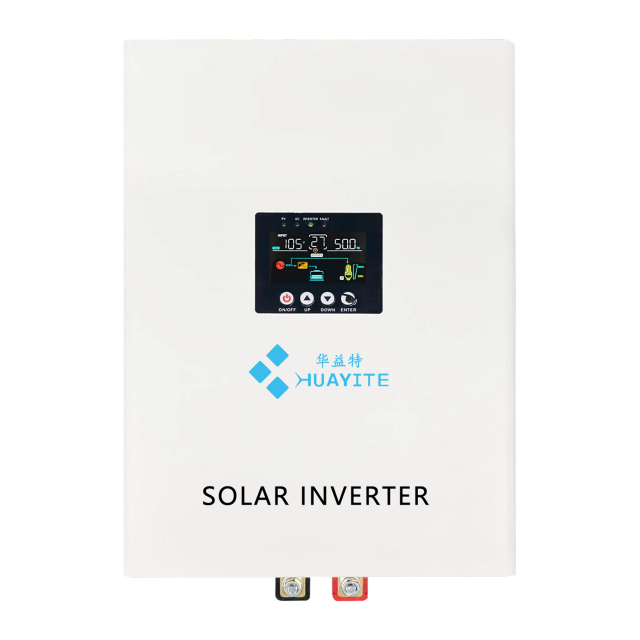
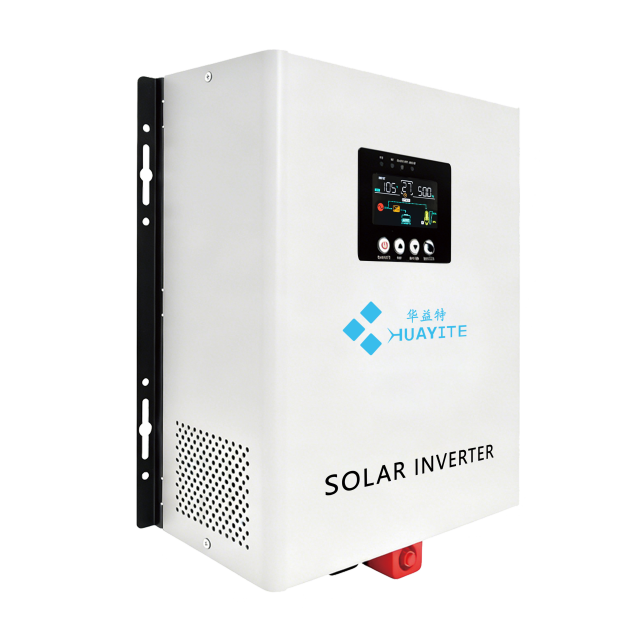
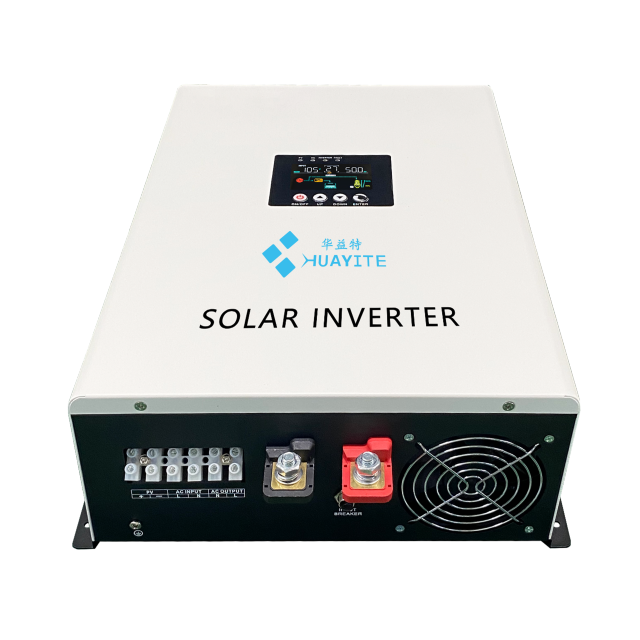
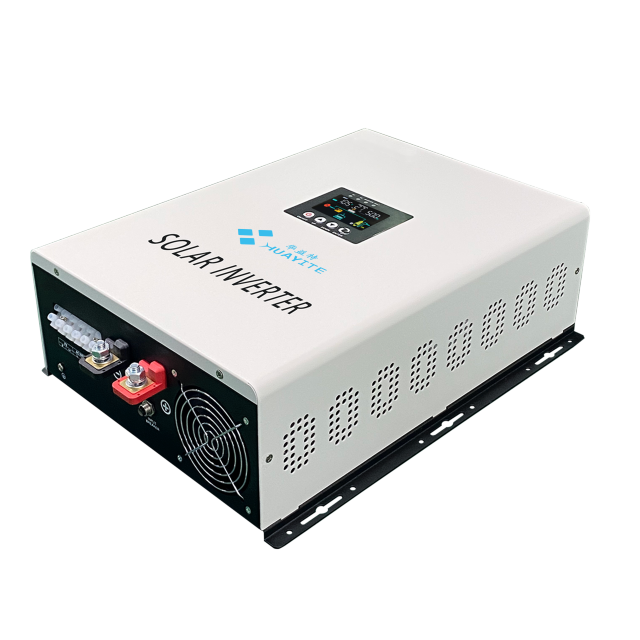
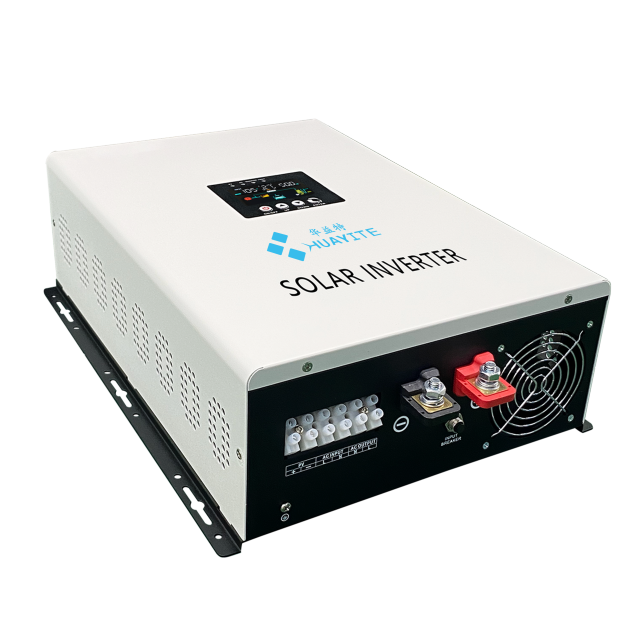
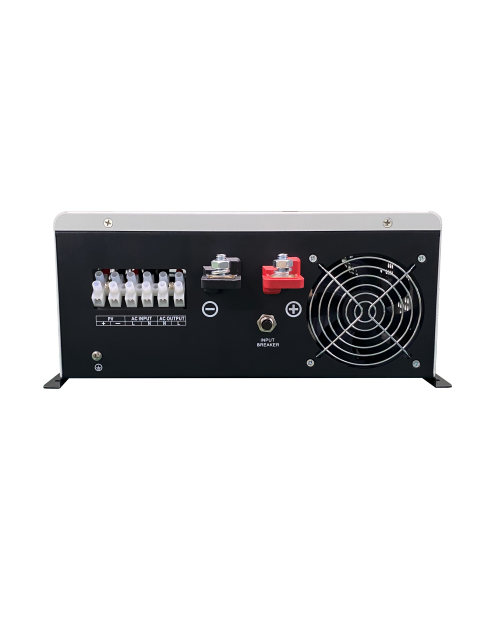
The HX series is a wall-mounted power frequency inverter built around small loads. Because the transformer stage is sized for one small circuit rather than a whole building, the enclosure stays compact enough to hang on the wall of a caravan locker, a cabin utility corner or a shop back room. Three jobs that are usually bought as three separate boxes sit inside that enclosure: a solar charge controller, a mains battery charger and an inverter, which together make a pure sine wave inverter charger. Panels charge the battery through the built-in controller, the mains tops the battery up whenever a supply is present, and the inverter turns stored DC into AC for the loads. One box, one set of battery cables, one place to look when something stops working. The controls are deliberately plain — four buttons and a display on the front — and everything else runs automatically once the unit is configured. Most of these units leave here for caravan and camper builds adding a small AC circuit, for cabins and remote workshops, and for distributor ranges that need a compact wall-mounted step below the larger low-frequency inverters. - Caravan and motorhome — an rv solar inverter has to earn its locker space: cabin lights, a compressor fridge, laptop chargers and a coffee machine all run from the leisure bank, and the bracket keeps the unit off the floor of a space that is already tight. - Camper trailer and overlanding — the 1000w pure sine wave inverter step covers a small fridge, a water pump, camera batteries and lighting without asking more of the bank than it can give. - Cabin and cottage — a weekend place running an off grid pure sine wave inverter gets lights, a router, a TV and tool charging from a panel and a modest battery bank, with the mains topping the battery up whenever it is there. - Small shop or office counter — till, router, printer, security camera and lighting stay on through an outage without a generator running all night. - Service van and mobile workshop — cordless tool chargers, a laptop, test instruments and hand tools, all fed from the vehicle battery and a roof panel. - Remote monitoring cabinet — modem, router, camera and controller on a solar-plus-battery site where nobody visits for weeks. - Light backup for a grid-connected house — a dedicated circuit for the router, the fridge and a few lights, fed from a battery the mains keeps topped up.
Digital control board
One board runs the charging cycle and the inverter together, which is what makes a pure sine wave inverter charger practical at this size: the unit behaves as a single machine instead of a charger and an inverter competing for the same battery. Charging is managed automatically and follows the battery state rather than a fixed timer, and the charging current is set for the bank the site actually uses. Solar input with MPPT tracking The built-in controller sweeps the panel operating point to hold it at maximum power as light, shade and panel angle change through the day — worth having on a caravan roof or a tree-lined cabin site where conditions never sit still. It is a PWM design, which keeps the circuit simple and robust at these power levels. Each one acts on the stage it protects, so a fault on the load side does not take the charger down with it, and the display reports what happened instead of leaving the installer to guess. Energy-saving mode trims consumption when the loads are idle, and battery-priority mode puts the battery ahead of the mains when a site is running on stored energy. A single conversion path Everything on the AC output passes through the same dc to ac power inverter stage. There is no second converter switching in as the load changes, so waveform quality stays consistent whether the site is running a phone charger or a bench grinder. - Ratings from 350 W to 1200 W — pick the step that matches the load instead of paying for headroom that will never be drawn; a caravan running lights, a laptop and a TV does not need the same unit as a workshop running a bench tool. - Wall space, not floor space — the enclosure hangs flat against a bulkhead or wall, so it takes no floor area in a locker, cabinet or back room, and the cable runs stay short because it can sit close to the battery. - A transformer stage that tolerates start-up current — the power-frequency design carries the anti-impact, super loading behaviour this family is known for, so fridge compressors, pumps and tools pull their inrush without the output collapsing the moment they kick in. - A wide AC input window — the charger keeps working through sags and spikes that knock a narrow-input unit offline, which is exactly what is wanted from an off grid pure sine wave inverter on a weak supply or a small generator. - Solar charging without a second box — the controller is already inside, so there is no extra wall unit to mount, no second set of cables to the battery, and one fewer connection to work loose on a moving vehicle. - Service access from the front — terminals sit behind a screw-fixed cover, the fan and side vents are reachable, and a technician can re-terminate or clear a fault without pulling the unit off the wall. - Repeatable builds — as solar inverter suppliers we hold the specification, terminal layout and documentation steady from batch to batch, so the second container matches the first and installers are not relearning the unit every season. - Built for the road — an rv solar inverter has to take vibration, tight lockers and a battery bank that is often smaller than a house bank; the bracket fixing and bolted terminals are chosen with that duty in mind.
This is a power frequency inverter at the small end of the range. The next step up in capacity is the HX-PV Series Solar Inverter shown alongside it, and where a project needs a heavier transformer and more surge for motor loads, the larger low-frequency off-grid lines take that duty. All of them keep the wall-mounted, single-enclosure approach; the difference is capacity and how much of the system is integrated. Confirm the ratings available for your project with your sales contact.
Keep the rating honest against the load list. Where a fridge, a kettle or a microwave is already in the plan, the 1000w pure sine wave inverter step leaves room for a second appliance without flattening the bank, and it still fits the same wall space.
As pure sine wave power inverter suppliers we cover the rest of the chain: MPPT controllers when an existing system needs a bigger array, wall-mounted lithium batteries when the bank is being replaced, and integrated inverter-and-battery cabinets where a site would rather not wire the parts together. Send the load list and the battery voltage and we will point you at the combination that fits.
| Output waveform | Pure sine wave |
| Rated power | 350 W to 1200 W, model dependent |
| Peak power | Up to 2x rated output |
| Battery input | 24 V or 48 V DC |
| AC input range | 145-275 VAC |
| Output voltage | 220 VAC, ±2% in battery mode and ±5% in mains mode |
| Output frequency | 50/60 Hz, ±0.3 Hz in battery mode with automatic tracking in mains mode |
| Conversion efficiency | 87% or higher |
| Mains charging current | 10-50 A, model dependent |
| Solar charging | Built-in PWM controller with MPPT tracking |
| Display and controls | LCD with LED indicators; ON/OFF, UP, DOWN and ENTER buttons |
| Protections | Short circuit, over-voltage, under-voltage, overload and over-temperature |
| Operating temperature | -10 °C to 50 °C |
| Enclosure | Wall-mounted, 280 x 275 x 120 mm, net weight 7.5-9.3 kg by model |


The datasheet for each rating covers continuous and peak power, battery voltage, the AC input window, output voltage and frequency, dimensions and weight. If ratings need to be compared side by side for a tender or a catalogue page, ask for the model list as a single sheet. The manual is written for the person holding the screwdriver: mounting, wiring terminal by terminal, the settings to enter at commissioning, and the fault indications the display can show. The system diagram for the dc to ac power inverter is supplied as its own page for drawing sets, and the nameplate on the unit carries the rated values for exactly that build — check it against the order before the unit goes to site. Standards and test documentation depend on where the unit is going. Tell us the standard your market or utility asks for and we will confirm which test reports and declarations can travel with the order, in writing, before it is placed. A packing list and the warranty statement ship with every unit.
Choosing the right unit for a site starts with a conversation, not a catalogue number. Share your load profile, battery voltage and backup requirement, and our engineers will help you match a model from our full range and confirm the accessories that go with it. The same Shenzhen-based team, with in-house R&D and more than 20 years in the industry behind them, stays with you after delivery: wiring and commissioning guidance, fault diagnosis, and spare-part support for units already in service. For private-label projects, they also handle artwork and specification approvals before production.
What travels with the unit The nameplate on each cabinet carries the rated values of that exact build — output power, battery voltage, AC output voltage and frequency — and the datasheet and manual packed with it describe the same build, not a neighbouring rating in the family. Where a tender, a customs file or a utility asks for a standard number, tell us the destination and the standard named in the document. This series is built for 220/230 V, 50/60 Hz markets, and which test reports and declarations can travel with a particular order is confirmed in writing before that order is placed, because the right answer changes with the destination. Incoming check before the container goes into stock Power one unit from each batch and confirm what the display reports: output voltage and frequency, charging current against the value set for that build, each protection indicating when it is tripped and clearing when it resets, the fan running, and the nameplate matching the order. A DC clamp around the battery lead during the same check gives you the idle current of the rating you are stocking, taken on your own bench rather than from a catalogue. Two-year warranty and what a claim needs Every unit carries a 2-year warranty. A claim moves fastest with the nameplate photograph, the model and rating, the state the display shows when the fault appears, the load list that was connected at the time, the battery voltage in use and the commissioning date. Send those with the unit and the fault can usually be traced without a second round of questions. Board-level repair keeps a unit in service Main control board, display board and fan are the parts that fail in service; a distributor who keeps one of each on the shelf turns a warranty repair around locally instead of leaving a customer waiting for an international shipment. The transformer, cabinet and terminal block rarely give trouble, and a unit damaged there returns to us rather than being reworked on site. Private-label cover Before the first branded batch ships, agree in writing who the end customer contacts first when something goes wrong, and who holds the spare boards in your market. Settling that before the container leaves keeps warranty questions from bouncing between brand and factory once units are in the field.